Styles /
scandinavian-kitchen
Scandinavian Kitchen Design In London – Calm By Design
Light, considered, quietly functional. A Scandi kitchen isn't about what you add, but about what you leave out, and how well everything that remains works.
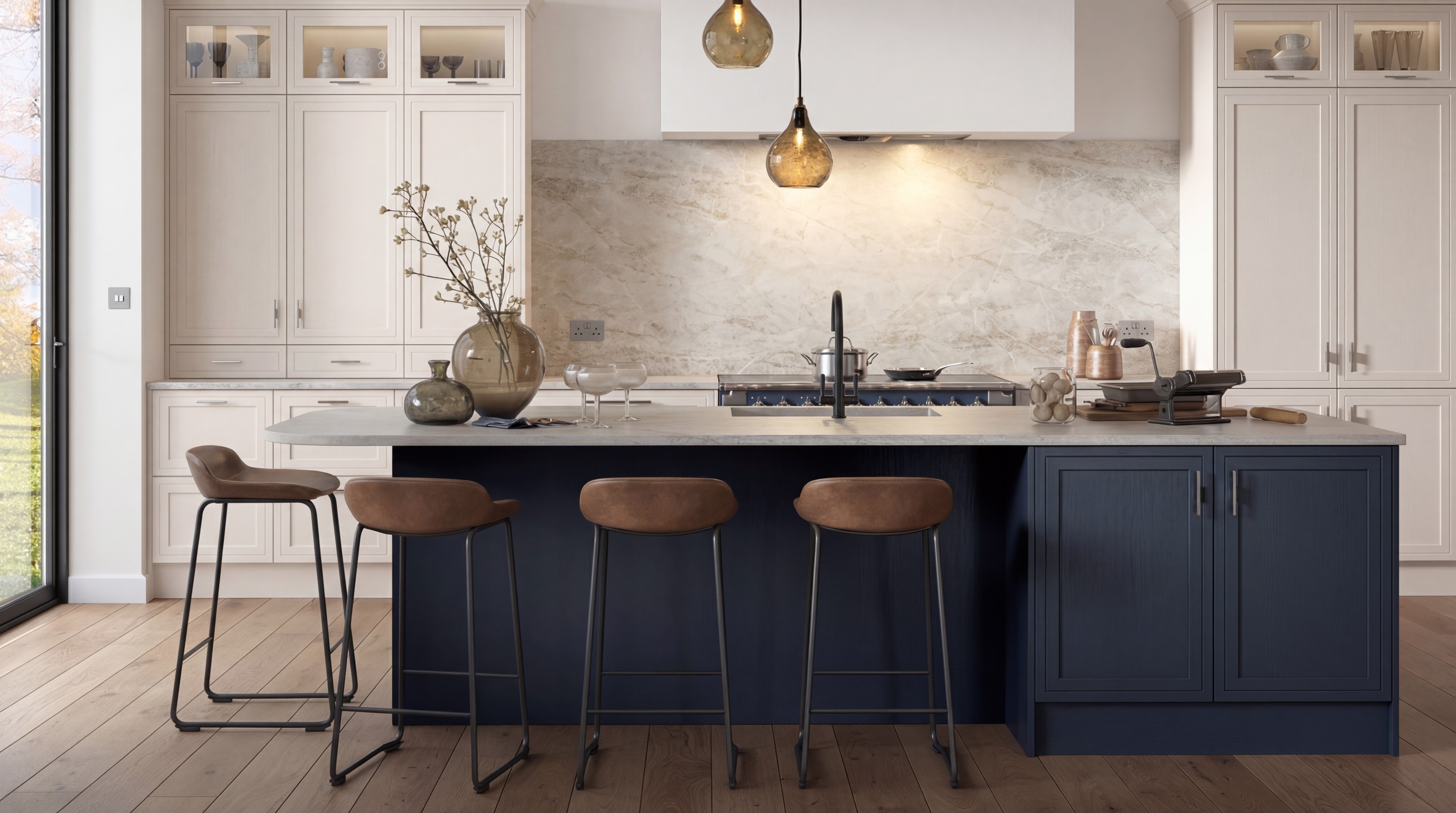
Layout & Workflow
A Scandinavian kitchen in London starts with function and strips away anything that obstructs light, movement, or visual calm. Short, logical routes between tasks. Clear sightlines across cooking, dining, and living. As few busy crossings as possible in a typically compact London footprint.
London Layouts We Work With:
Galley or L-shape. For narrower Victorian terraces or apartments; one long uninterrupted worktop, one side often carrying tall storage and appliances, the opposite kept visually lighter – sometimes with no wall units at all – to maintain that airy feel.
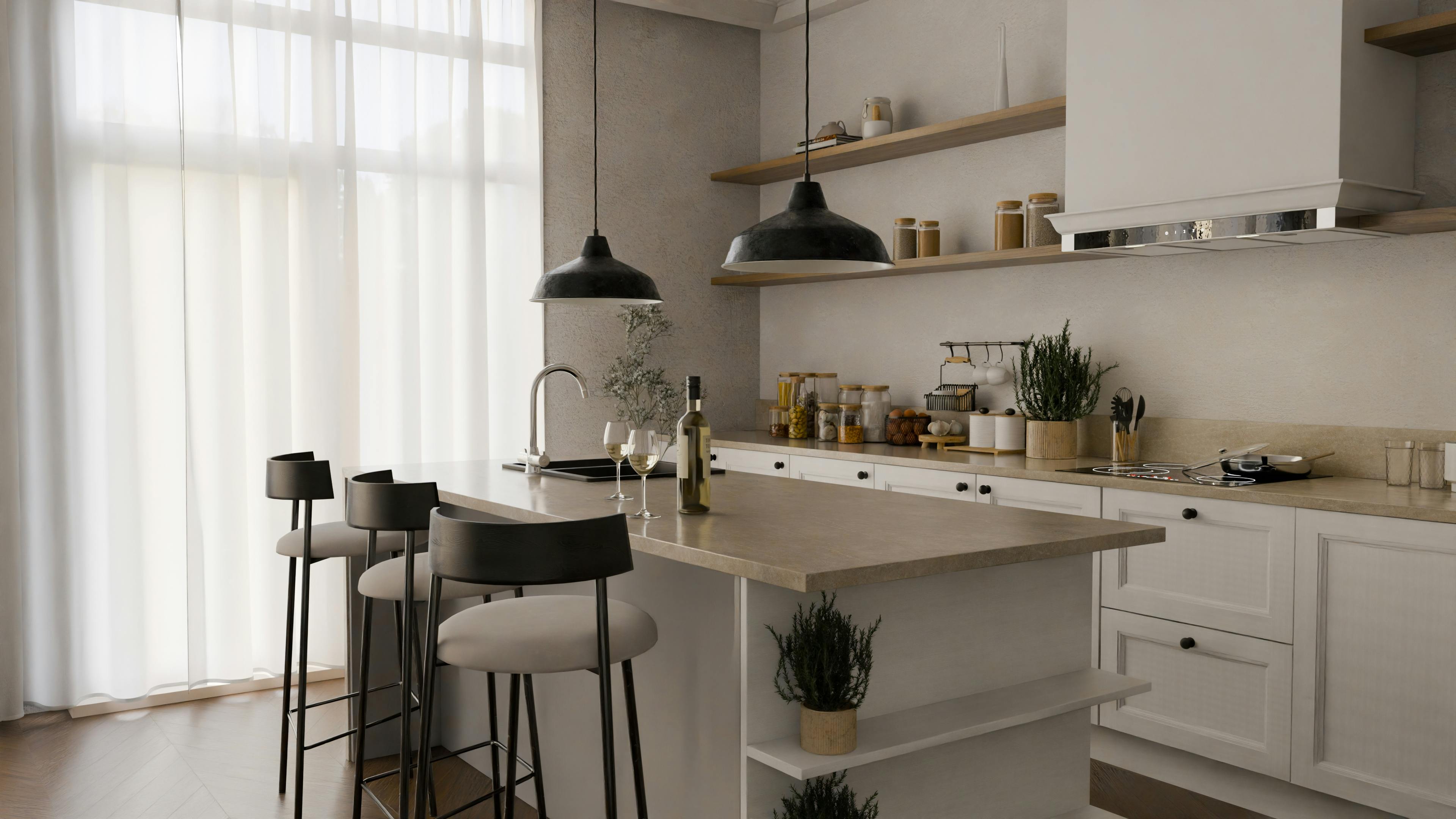
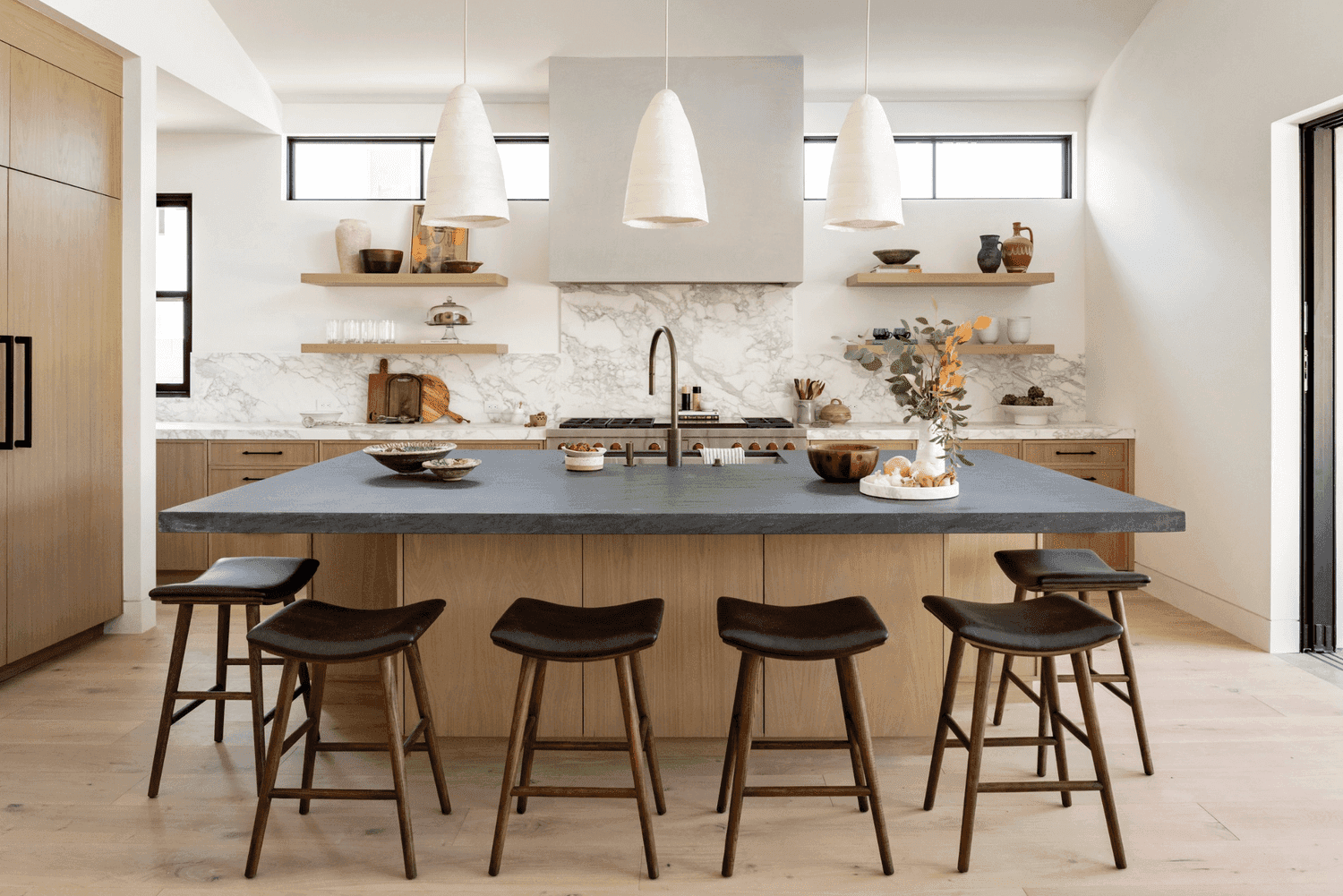
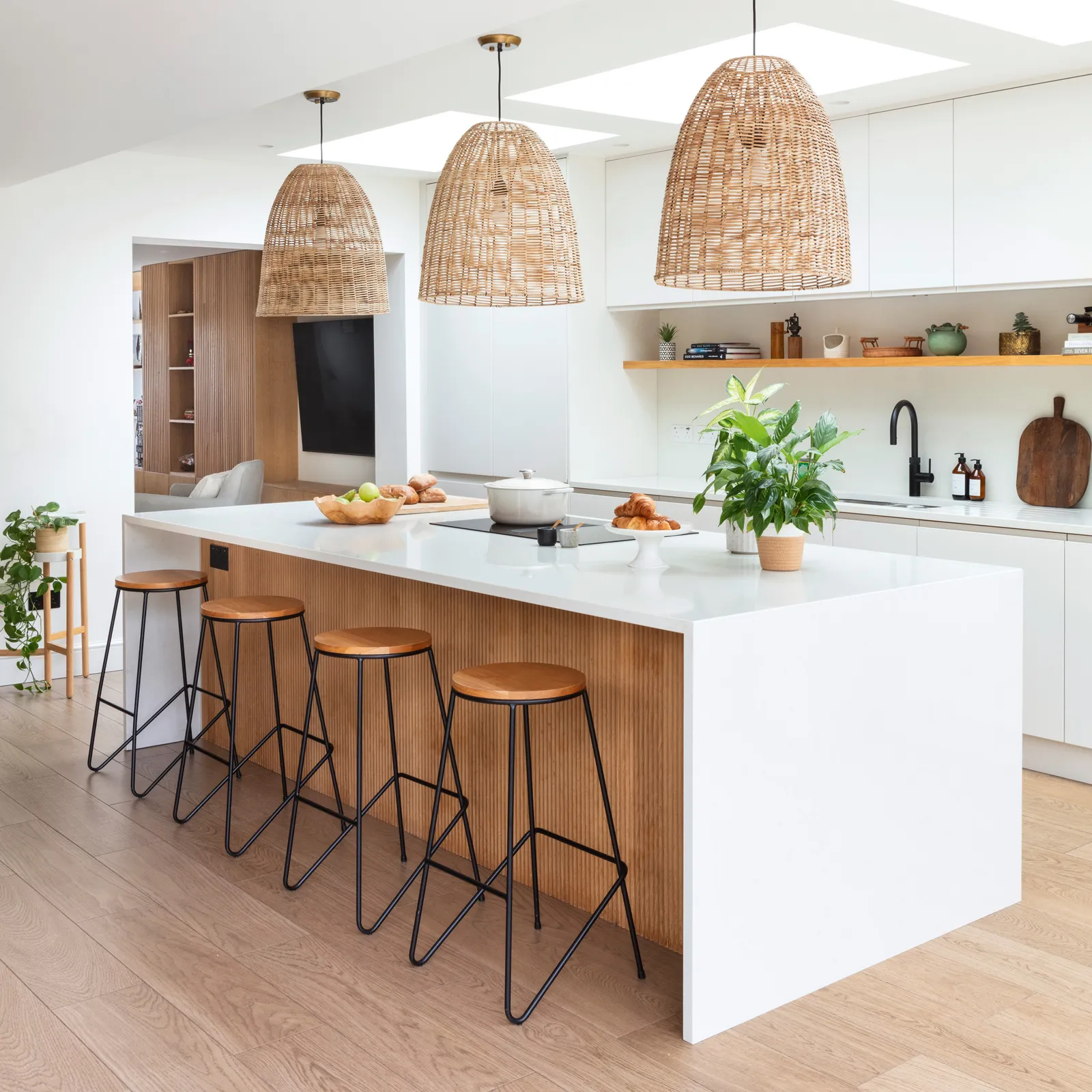
Island or peninsula. Where space allows, a slim minimal block becomes the social and prep hub; pale timber, thin worktop, no fussy detailing, reads like a piece of furniture in the room.
Open-plan living kitchen. Circulation around table, island, and sofa – generous and uncluttered. Routes from fridge to table and front door to coffee machine direct and instinctive.
The Through-Line:
Negative space is not wasted space. The breathing room between things is what makes minimalism feel generous rather than mean.
Cabinetry
Scandi kitchen cabinetry is a calm canvas – long, uninterrupted planes of wood and soft colour that quietly organise the space and bounce light around.
Flat or very simply framed fronts with clean horizontal lines and minimal visual breaks. Runs tend to be long and aligned, tall units grouped together, wall units reduced or replaced with open shelves to keep the room feeling open. Wider drawers and doors over lots of narrow units so the eye reads calm bands.
Materials & Finishes:
Light oak, ash, birch and pale timber veneers – sometimes contrasted with a darker island or tall run for depth.
Matt lacquers and sprayed paints in low sheen – grain and subtle texture showing through rather than high-gloss reflection.
Slatted and ribbed fronts on islands or tall units – vertical movement while staying tonal and restrained.
Soft Scandi or Japandi – warm beiges, mushroom tones and latte-coloured cabinets mixing wood and paint in the same run for gentle contrast.
Hardware ranges from true handleless Gola rails creating slim shadow lines, to simple J-pulls, small disc knobs, or slim linear bars in black, stainless, or muted brass – whichever keeps the overall feel ergonomic and unfussy.
Worktops
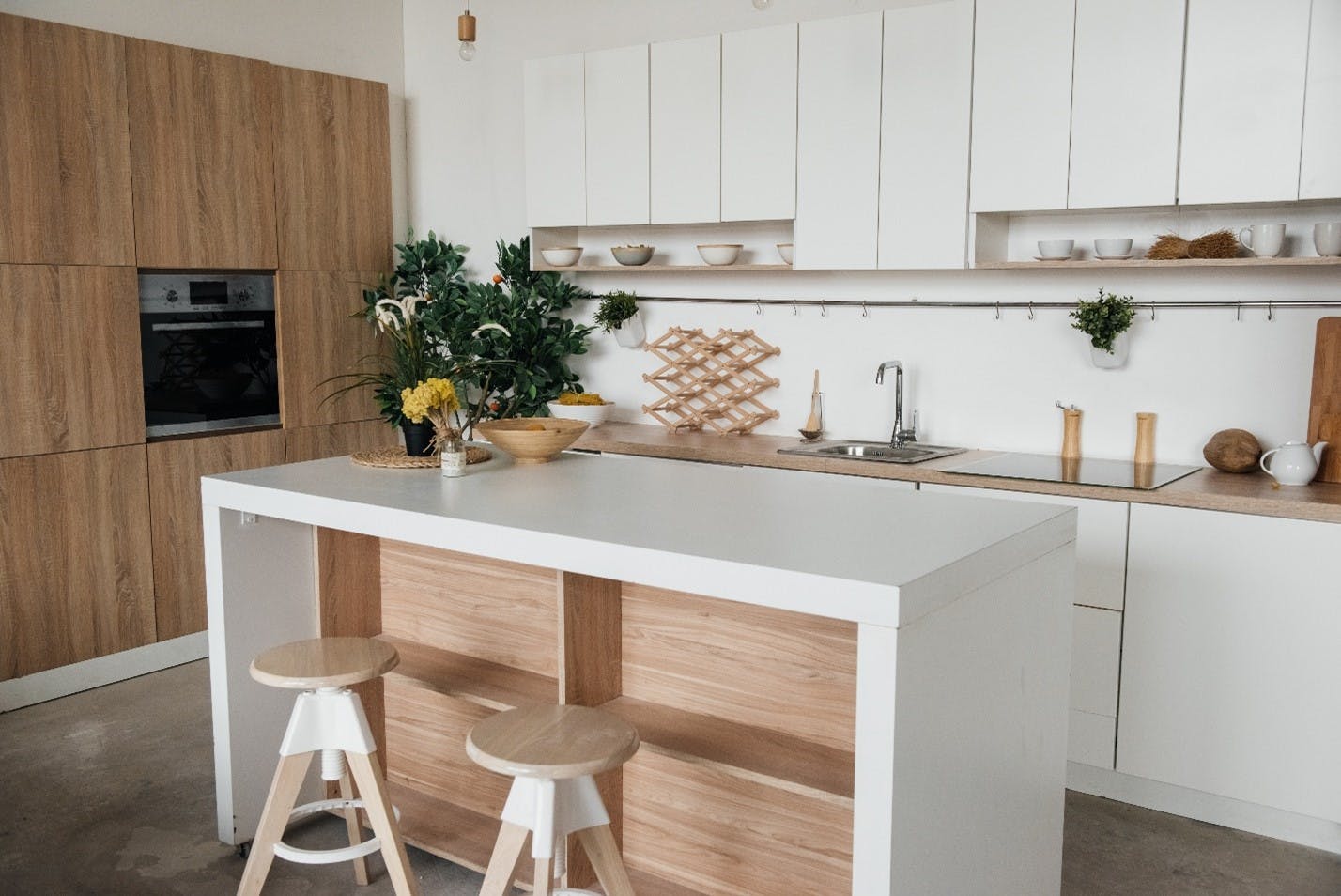
In a Scandi kitchen, worktops are soft, continuous planes that link wood, light and colour – calm, practical and quietly tactile rather than showy.
Pale, matte, or low-sheen surfaces that dissolve into the cabinetry rather than demanding attention. Warm whites, oat and stone tones, light greys with subtle veining at most – no loud marbles or busy pattern. Honed, matt, or satin finishes that diffuse light rather than reflect it.
Materials & Where They Work:
Quartz: Clean, contemporary, very durable; the most practical choice for busy London kitchens, in soft warm-white or stone tones.
Porcelain or Dekton: Ultra-slim, architectural, heat and stain resistant; excellent for thin profiles that suit minimal Scandi schemes.
Solid timber: Oak or ash, adding cosy hygge warmth on the island or prep table; beautiful with white or grey cabinetry, repairable, needs oiling.
Honed natural stone. Granite, marble, or quartzite in soft, organic tones; quietly luxurious when kept to subtle veining and matte finish.
The Classic Scandi Pairing:
Light oak or ash cabinetry with a warm white or stone-coloured quartz. Edges kept simple – square, micro-bevel, or very soft pencil-round. Long, continuous stretches of worktop with minimal joints, so the eye travels uninterrupted.
Hardware & Metals
In a Scandi kitchen, hardware is quiet punctuation – small, precise details that warm up pale cabinetry without stealing the scene.
The philosophy is soft contrast and simple forms. One dominant metal, one supporting act, each repeated in at least two places (handles, tap, lighting) so the scheme feels intentional rather than assembled.
Metals & Where They Work:
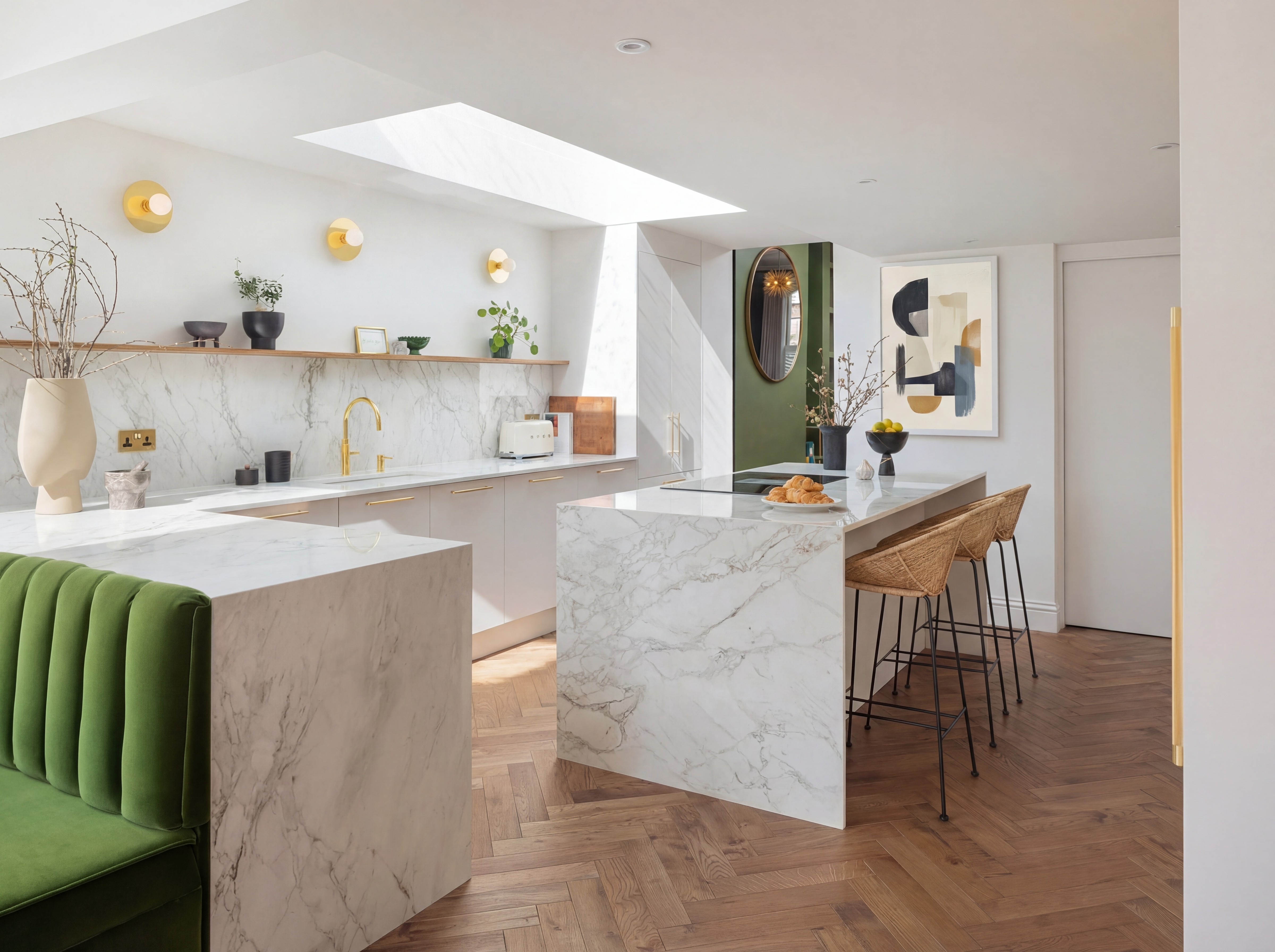
Brushed brass or warm gold – adds warmth and a touch of luxe to pale wood and white cabinets; reads soft and cosy when unlacquered or brushed, especially with natural stone.
Matte black – crisp, graphic definition on white and oak; non-reflective, great for handles, taps, and glass door frames in minimal London flats.
Brushed nickel or stainless – quiet, practical, timeless; the least statement choice, ideal when cabinetry and worktops should lead.
With Pale Cabinets:
Brushed brass or matte black handles stop the space from feeling sterile.
With Light Oak:
Black gives graphic contrast, warm brass makes the scheme feel softer and more hygge. In north-facing London rooms, brushed brass and warm-toned steels support that soft Scandi glow better than cold chrome.
Tiling & Splashback
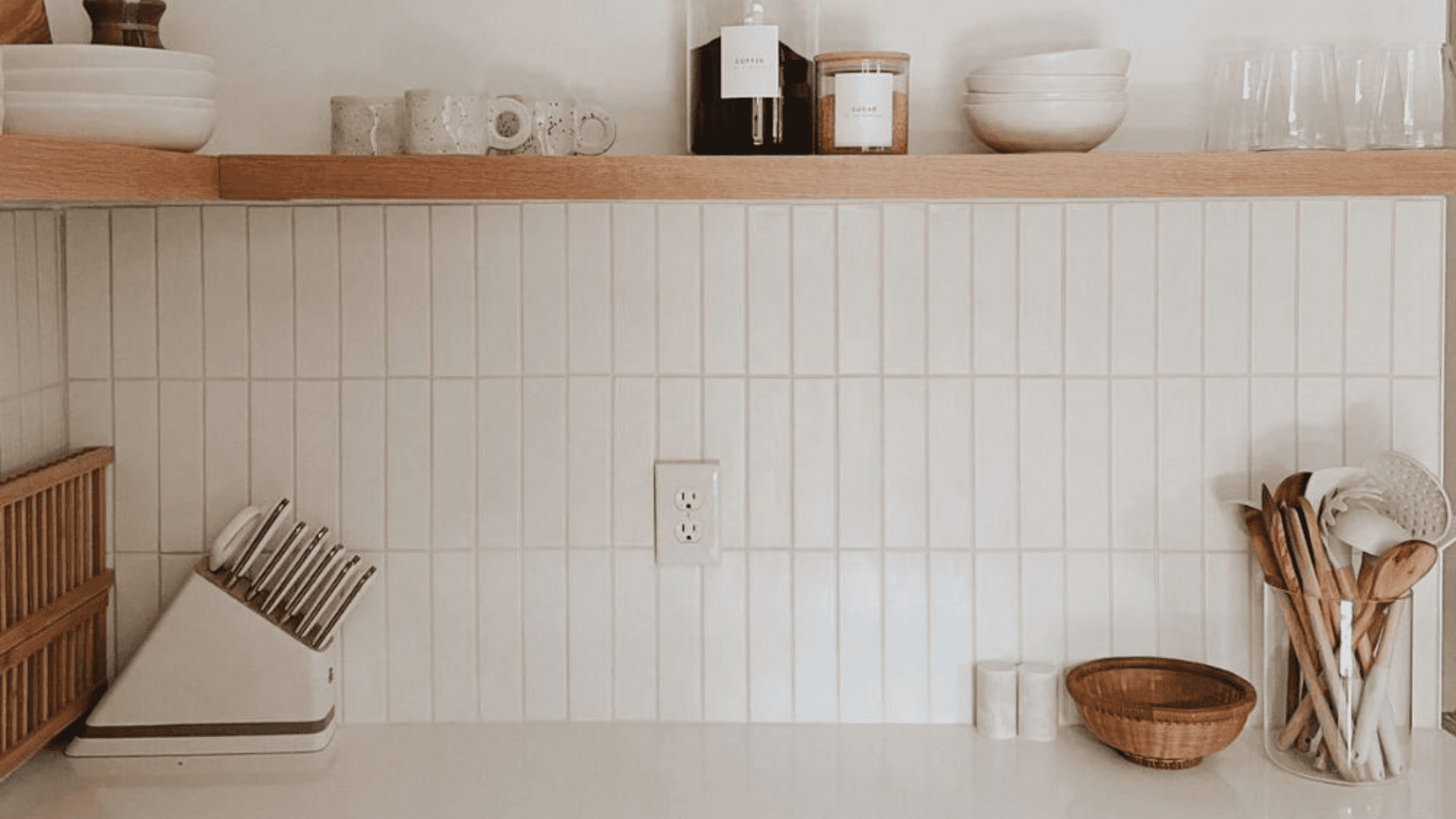
In a Scandinavian style kitchen, the splashback is a quiet backdrop – a slim band of light and subtle texture that amplifies daylight rather than demanding its own moment.
Materials That Suit The Mood:
White or off-white subway or square tiles in soft matt or satin – classic choice, usually stacked in straight lines rather than brick-bond to reinforce the clean graphic grid.
Honed marble, limestone, or quartz slab – gentle veining, seamless look, especially where the same material runs from worktop up the wall; quietly luxurious in London kitchens.
Zellige and handmade-look tiles in white, warm grey or putty – softly irregular, depth, and a touch of perfectly-imperfect texture without loud colour.
Simple white glass or acrylic – suits ultra-minimal schemes, bounces light around like an extra window.
Grout Kept Calm:
White grout for seamless results, light or mid-grey to gently outline tile shapes without feeling busy. Pattern, where it exists, is always subtle – fine marble veining, gentle terrazzo, the quiet grid of tiles itself. Full-height tile or slab behind the hob elongates compact London kitchens and emphasises vertical lines beautifully.
Flooring
The floor of a Scandi kitchen is the calm, continuous base layer – pale, natural and quietly practical, helping light bounce around and linking the kitchen to the rest of the home. Pale woods and wood effects are the default, with occasional concrete or stone looks for a more urban edge in London extensions.
Core Materials:
Engineered light oak, ash, or birch in wide planks – the archetypal Nordic kitchen floor; handles London humidity and underfloor heating far better than solid boards
Wood-effect porcelain in cool limed creams or pale greys – the Scandi look with full water and stain resistance for hard-working open-plan spaces
Pale concrete or stone-look porcelain – more minimal, slightly industrial feel; works particularly well in Victorian terrace extensions
Tones Stay Firmly In The Light, Nature-Inspired Spectrum:
Blond oak, whitewashed boards, soft greiges. Herringbone and chevron patterns bring period character to minimalist Scandi schemes in London without losing the pale, airy feel. High-gloss tiles, flat mid-grey laminates, and heavy knot patterns all work against the calm, natural mood Scandi flooring is built on.
In Open-Plan Layouts…
Extending one floor finish through kitchen, dining, and living reinforces the uncluttered Nordic aesthetic and makes modest London footprints feel genuinely generous.
Colour Palette
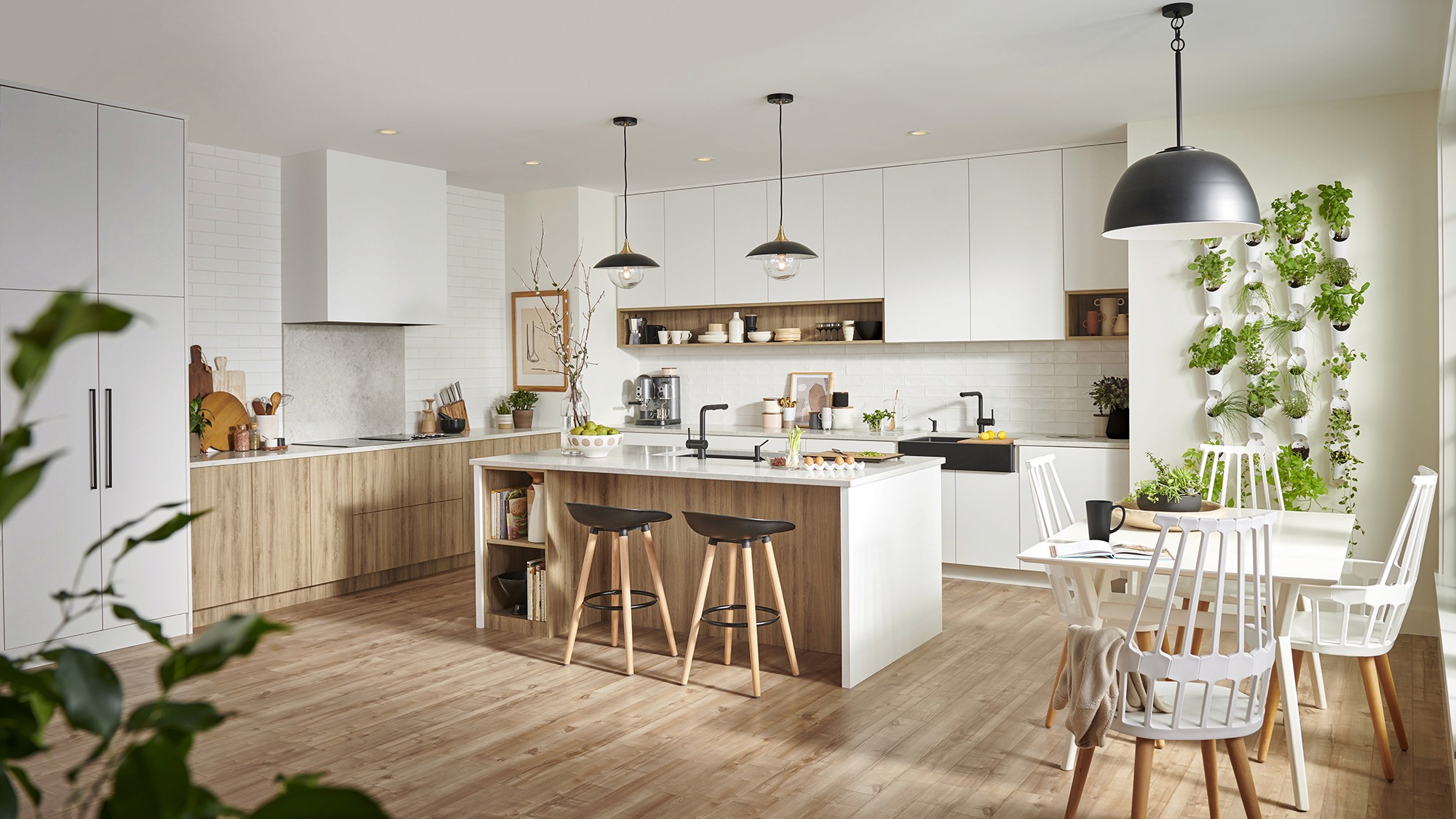
A minimalist Scandinavian kitchen design palette is a calm backbone – layers of light neutrals, soft contrast, and natural tones that make even a small, grey-day London kitchen feel open and restful.
The foundation is a light, neutral canvas: milk white, off-white, stone grey, pale greige, and sand. These tones reflect light, visually expand compact spaces, and give a serene backdrop for wood, stone, and textiles to stand out.
Wood is effectively part of the palette – blonde and warm-toned timbers bring softness and warmth, stopping white kitchens from feeling clinical.
Accent Hues Stay Nature-Inspired & Used With Restraint:
Sage, olive, and soft forest greens – grounded and biophilic, very current in London kitchens, beautiful on an island or tall run.
Powder, airforce, or inky blues – added sparingly for depth while remaining calm.
Beige, taupe, and muted terracotta – a rustic minimalism mood that still reads unmistakably Nordic.
The Balance Rule:
Darker hues kept low – floor, base units, island – with lighter tones at eye level and above to maintain that signature airy feeling. One accent family per scheme, repeated on a larger element and echoed in textiles or accessories.
Lighting
Scandi kitchen lighting is soft choreography – warm, layered, and deliberately gentle, there to create hygge and clarity, never harshness.
Three Layers, Always:
Ambient – recessed spots, flush ceiling lights, or diffused pendants giving an even low-glare wash; dimmable, warm white around 2700–3000K so evenings feel cosy.
Task – under-cabinet LEDs or integrated hob lighting, discreet and minimal so they support the clean look while genuinely illuminating prep zones.
Accent and decorative – pendants over islands and tables, small wall lights or shelf LEDs creating pools of light essential for that Nordic atmosphere.
Pendant Forms:
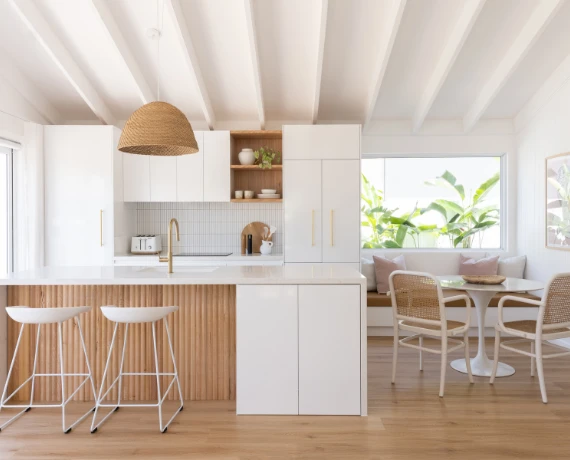
Domes, simple cones, opal globes, soft geometric shades in painted metal, glass, bentwood, or rattan – muted tones that sit quietly with the palette. Single statement pendants or rows of three over the island, hung low enough to create intimacy without blocking sightlines.
In London's often compact or north-facing rooms, warm white LEDs below 3000K support that soft Scandi glow – cool whites actively work against it.
Appliances
In a Scandi kitchen, appliances are quiet and streamlined – high-functioning but visually calm, so the architecture of pale cabinetry, timber, and stone stays centre stage.
Integrated Is The Default
Ovens, dishwashers, and refrigeration are built into tall banks and base runs for a continuous look. Microwaves, coffee machines, and small appliances are hidden in pocket-door breakfast cupboards to keep worktops uncluttered. From the living area or hallway, the kitchen should read as a calm wall of cabinetry, not a collection of machines.
Finish & Form:
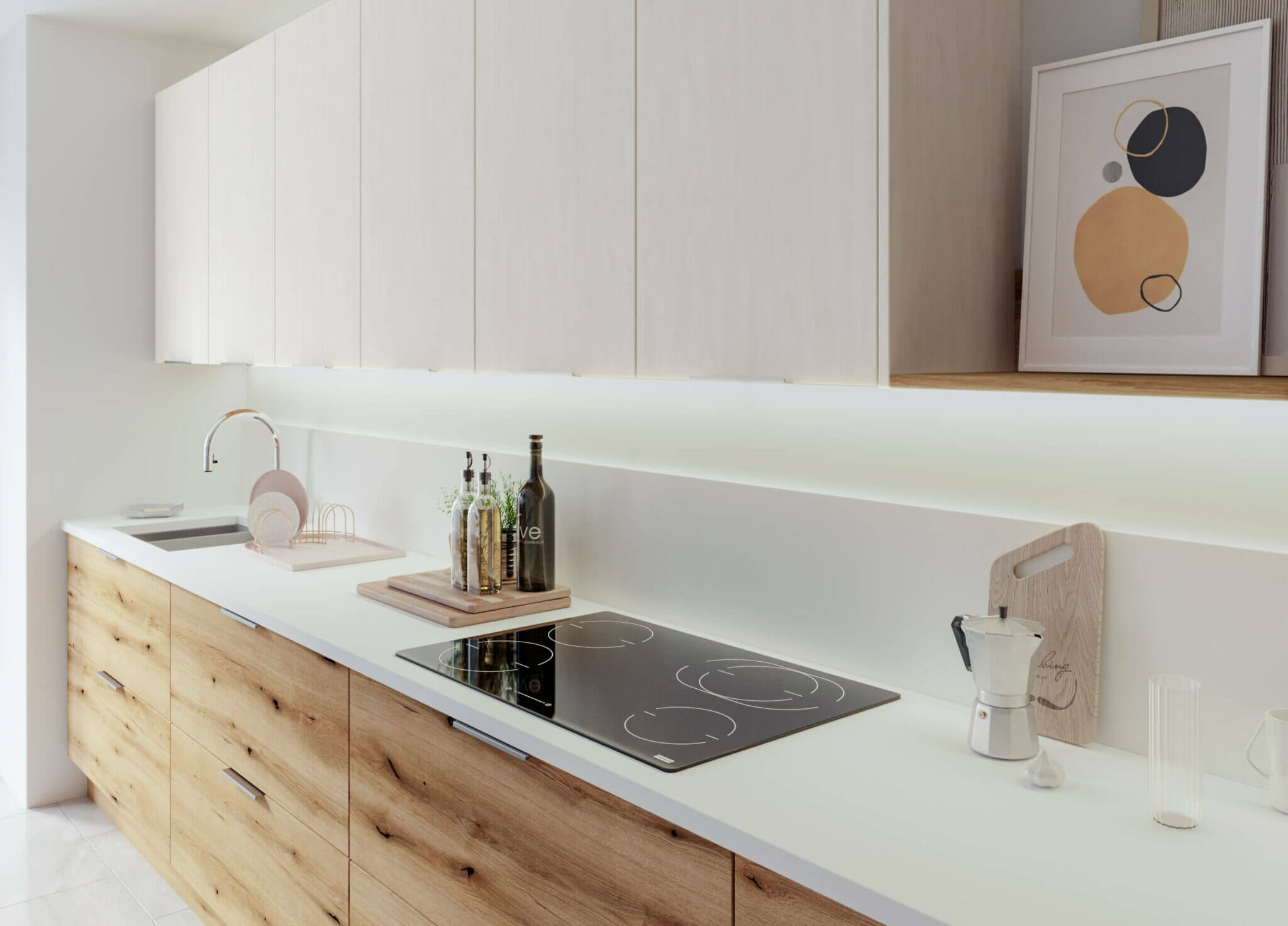
Induction hobs – sleek black glass on pale worktops, touch controls, no visual bulk; the go-to for modern Scandinavian kitchen design.
Black glass or graphite ovens with slim stainless trims – stacked in tall banks, clean and architectural.
Tall integrated fridge-freezers behind slab doors – maintaining the continuous timber or painted runs Scandi kitchens rely on.
Built-in or ceiling extraction – hidden in a wall unit or bulkhead; downdraft on islands where a large hood would break the sightline.
Behind the calm facades, the spec is quietly advanced. A-rated refrigeration, induction for speed and safety, low-decibel dishwashers, smart functions where they genuinely support how London households cook and shop – quiet tech under a Nordic skin.
Joinery Details & Character
In a Nordic style kitchen, joinery character comes from honest materials and beautiful proportions doing the talking – not decoration.
Flat frameless slab fronts or ultra-slim framed doors create the "continuous wall" effect that makes compact kitchens feel cleaner and larger. Character lives in tiny decisions: sharp square edges feel crisp and modern, a very slight chamfer gives a softer Japandi-leaning feel. Exposed birch ply edges – graphic layered stripes celebrating the construction rather than hiding it – are a distinctly Nordic detail worth specifying on islands or tall units.
Details That Define Nordic Kitchen Design Character:
Handleless channels and recessed plinths – fine shadow lines that visually separate elements and make cabinets appear to float.
Ribbed or slatted timber cladding on islands – texture and movement without breaking the minimal silhouette.
Continuous veneer wrapping around islands – perfectly aligned grain, no seams, craft that reveals itself on close inspection.
Pocket-door breakfast cupboards and bar cabinets – wrapped in the same quiet fronts so the minimalist story holds even at breakfast.
Oak or birch interiors with dovetailed drawer boxes – hidden quality that rewards every time a drawer opens.
Tall floor-to-ceiling banks housing larders, bar cupboards and utilities feel like a single timber volume – particularly powerful in London side-return extensions where the full height of the room can be used.
Storage
Scandi storage is the hidden engine of the room – super-organised, mostly concealed, designed to keep counters visually empty and surfaces calm.
One main tall zone (fridge, pantry, ovens) keeps bulk food, small appliances, and utility items concentrated in a single vertical block. This anchor stops things migrating onto worktops and keeps the rest of the kitchen low and light, crucial in open-plan flats.
Full-height larder cupboards with internal drawers, door racks, and worktop breakfast zones swallow cereals, jars, baking kit, and coffee gear behind a single pair of doors.
Everyday Storage Moves:
Wide pan and plate drawers with oak or birch inserts – everything visible from above, nothing lost at the back; the Scandi storage default.
Slim pull-outs beside the hob – oils, spices, and baking ingredients in 150–300mm gaps turned into high-value storage.
Concealed recycling and waste bins – under the prep or sink zone, non-negotiable for the clear-counter Scandi look.
Pocket-door appliance garages – kettles, toasters, and coffee machines permanently plugged in but invisible; one move that halves the visual clutter of a small kitchen.
Open shelves used sparingly – short runs near windows or above coffee zones, styled with repeated whiteware, simple glass jars, and a few cookbooks; everything else behind closed doors.
In Small London Scandi Kitchens:
Go taller not deeper, keep one continuous uninterrupted prep run, and use every gap – including plinth drawers for trays and baking sheets. Hidden complexity behind a calm, minimal facade.
Why Kitchen Fitters London For Scandinavian Kitchens
Scandi design rewards precision at every stage – in the proportions, the materials, and the finish. We manage all of it.
Exclusive manufacturer partnerships – direct access to premium pale timber veneers, natural stone, ribbed panels, and hardware unavailable through standard trade suppliers.
Full end-to-end project management – one project manager coordinates every trade so the calm of the design survives intact into the build.
Bespoke and custom work – ribbed islands, slatted cladding, integrated appliance banks, and joinery details designed specifically for your London property.
Comprehensive warranty – materials, workmanship, and installation all covered long after completion.
We bring the showroom to you – timber samples, worktop sections, and hardware finishes brought to your home so every decision is made in your actual light.
Scandinavian Kitchen Design London FAQs
What defines Scandinavian kitchen design in London?
Scandinavian kitchens in London are built around calm efficiency – pale timber or painted cabinetry, clean layouts, integrated appliances, and a palette rooted in natural light and Nordic materials. The defining principle is that everything earns its place: nothing decorative, nothing superfluous, and storage planned so surfaces stay clear.
What's the difference between Scandinavian and minimalist kitchen design?
Minimalist Scandinavian kitchen design and pure minimalism share clean lines and uncluttered surfaces, but Scandi is warmer and more liveable. Where minimalism can feel stark, Scandinavian style brings in pale timber, natural textures, soft neutrals, and layered lighting to create hygge – that sense of comfort and calm.
Can a Scandinavian kitchen work in a period London property?
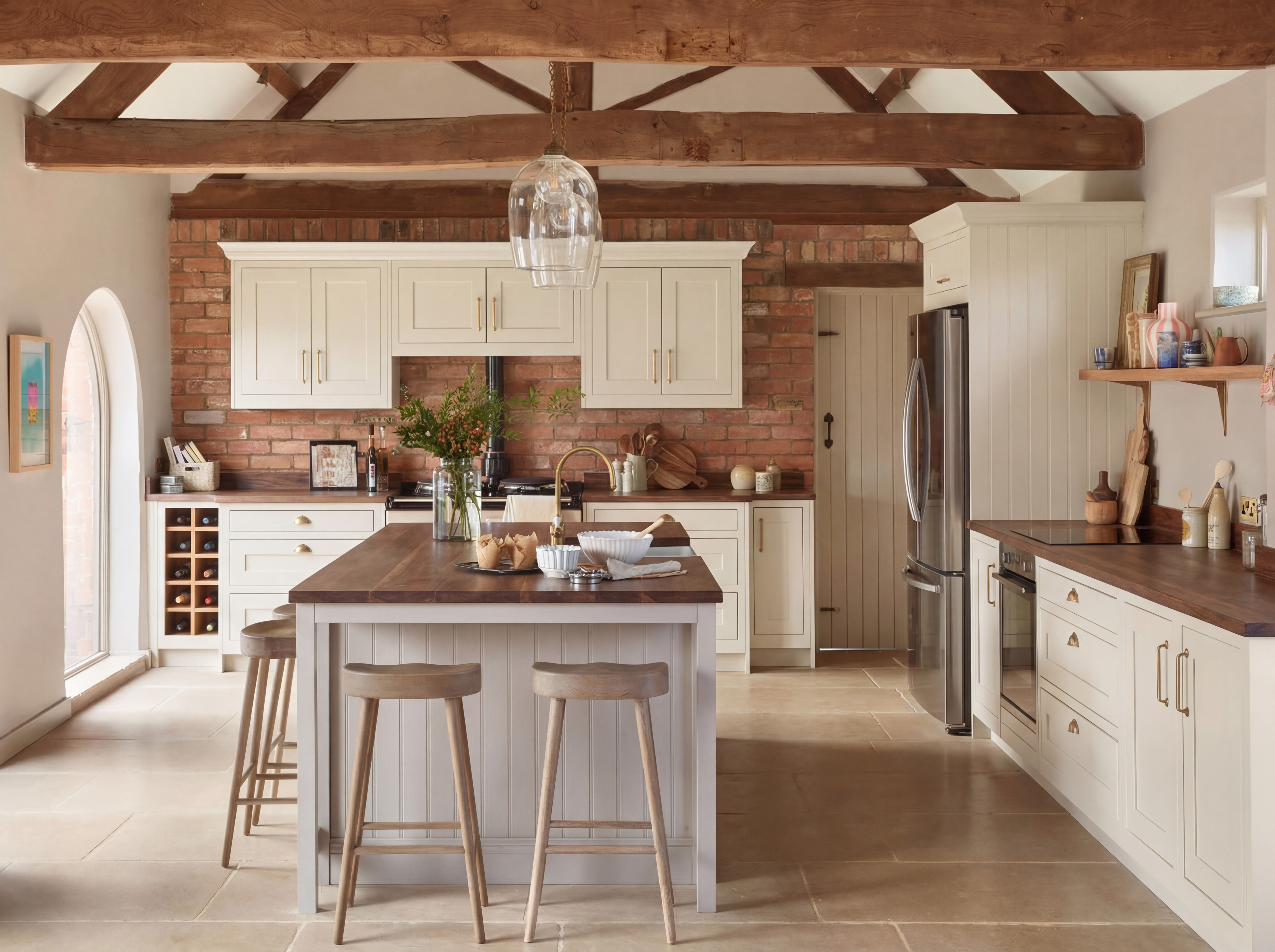
Yes – and the contrast can be beautiful. Pale slab cabinetry and natural timber against original cornicing, sash windows, or exposed brick create a layered, interesting tension that feels genuinely London. The key is respecting the architecture: shadow gaps that negotiate imperfect ceilings, materials that nod to the building's character, and a palette that works with London's often limited light rather than fighting it.
Do you supply all materials or do I need to source anything separately?
We supply everything. Through our exclusive manufacturer partnerships, we source cabinetry, worktops, hardware, tiling, and flooring based on your design brief and budget. You don't need to buy anything separately – design, supply, and installation are managed by one team from survey through to handover.
How long does a Scandinavian kitchen renovation in London take?
Most scandinavian style kitchens projects take 3–5 weeks from demolition to completion, depending on size and complexity. Projects involving bespoke joinery, ribbed cladding, or structural work may take longer. We provide a clear timeline during the planning stage, and one project manager coordinates every trade throughout, so the schedule stays on track and you're never left chasing updates.