Styles /
shaker-kitchen
Shaker Kitchen In London – Crafted With Intention
Simple frames, honest materials, proportions that feel inevitable. A Shaker kitchen doesn't try to impress – it just works, beautifully, for decades.
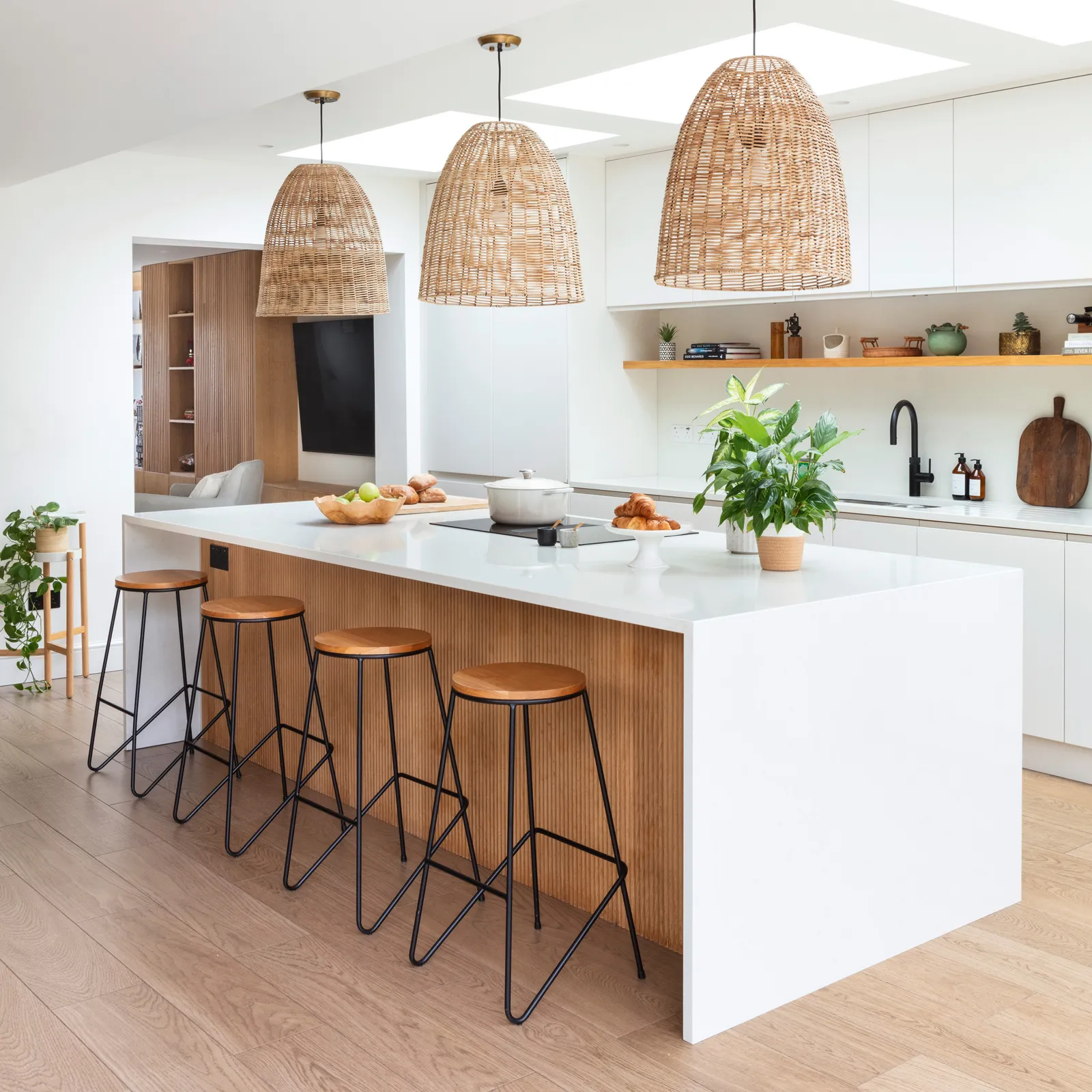
Layout & Workflow
A Shaker kitchen in London is built around order and calm practicality.
The classic work triangle (hob, sink and fridge or larder) sits at the centre, each leg roughly 1.2–2.4m apart so the cook pivots rather than commutes, and everyday tasks feel like one continuous, unhurried movement.
Islands and peninsulas are centred on windows, ranges, or key architectural features wherever possible, keeping that sense of symmetry and balance that Shaker cabinetry naturally brings to a room.
London Layouts We Work With:
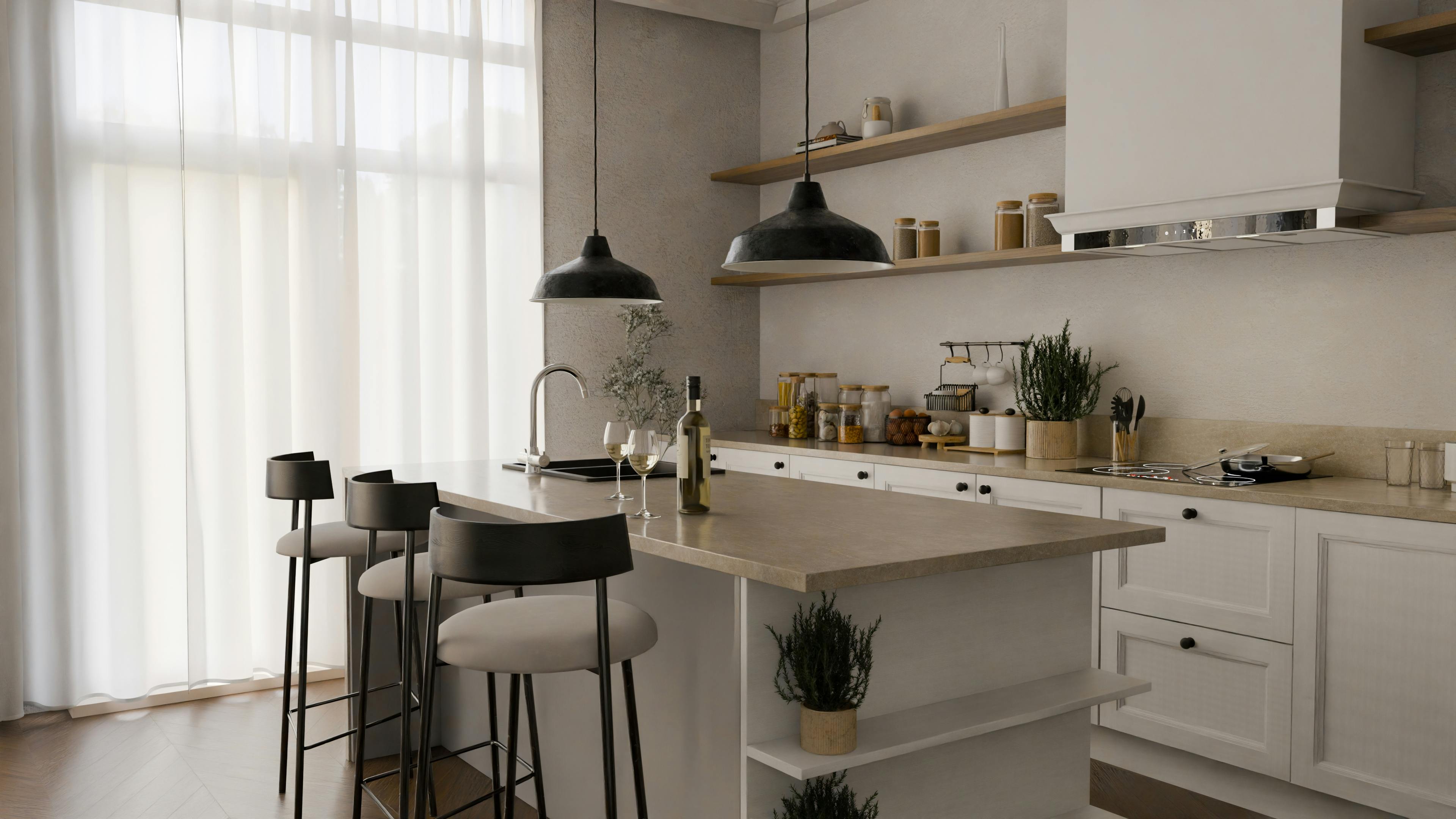
L-shape with island or table. Hob on one leg, sink on the return, island between kitchen and living zones for prep and seating; classic in side-return extensions.
Galley with dresser opposite. One side for the main cook and sink run, the other for dressers and tall larders; two facing furniture pieces rather than two hard lines of units.
U-shape or G-shape. Runs wrapping three sides with a peninsula or pass-through to the dining space for serving and sociable perching.
Each stretch of cabinetry has a job: cook, prep, store, gather. The result is a room that feels orderly but relaxed – and from the hall or sofa, simply right.
Cabinetry
Shaker kitchen cabinetry is the rhythm of the room – repeated frames marching calmly around the space, catching just enough shadow along each rail and stile to feel characterful without ever feeling fussy.
Every shaker kitchen in London that we design is built on the five-piece door: two vertical stiles, two horizontal rails, and a flat recessed centre panel. No extra moulding, no carving. Clean, squared, simple enough to sit in a Victorian terrace, Georgian townhouse, or modern extension without clashing.
Two Main Constructions:
In-frame shaker kitchen – doors set within a visible frame, more crafted and furniture-like, a small reveal around each door that signals quality and permanence
Lay-on Shaker – doors overlaying the carcass, cleaner and more contemporary, often with slimmer modern Shaker or micro-Shaker rails to lighten the look in open-plan spaces
Rail Width Tunes The Character
Classic frames feel heritage and weighty. Slimmer 45–60mm rails read more refined and current. Micro-Shaker at 8–15mm frames reduces visual weight further, keeping long runs and tall cabinets feeling light in city rooms with lower ceilings or lots of glazing.
Inside:
Solid hardwood frames, veneered centre panels for stability, and dovetailed oak or walnut drawer boxes. Doors that feel as good open as they look closed.
Worktops
In a Shaker kitchen, worktops are the supporting cast – solid, tactile surfaces that sit quietly with those framed doors while still bringing enough depth and contrast to make the joinery sing.
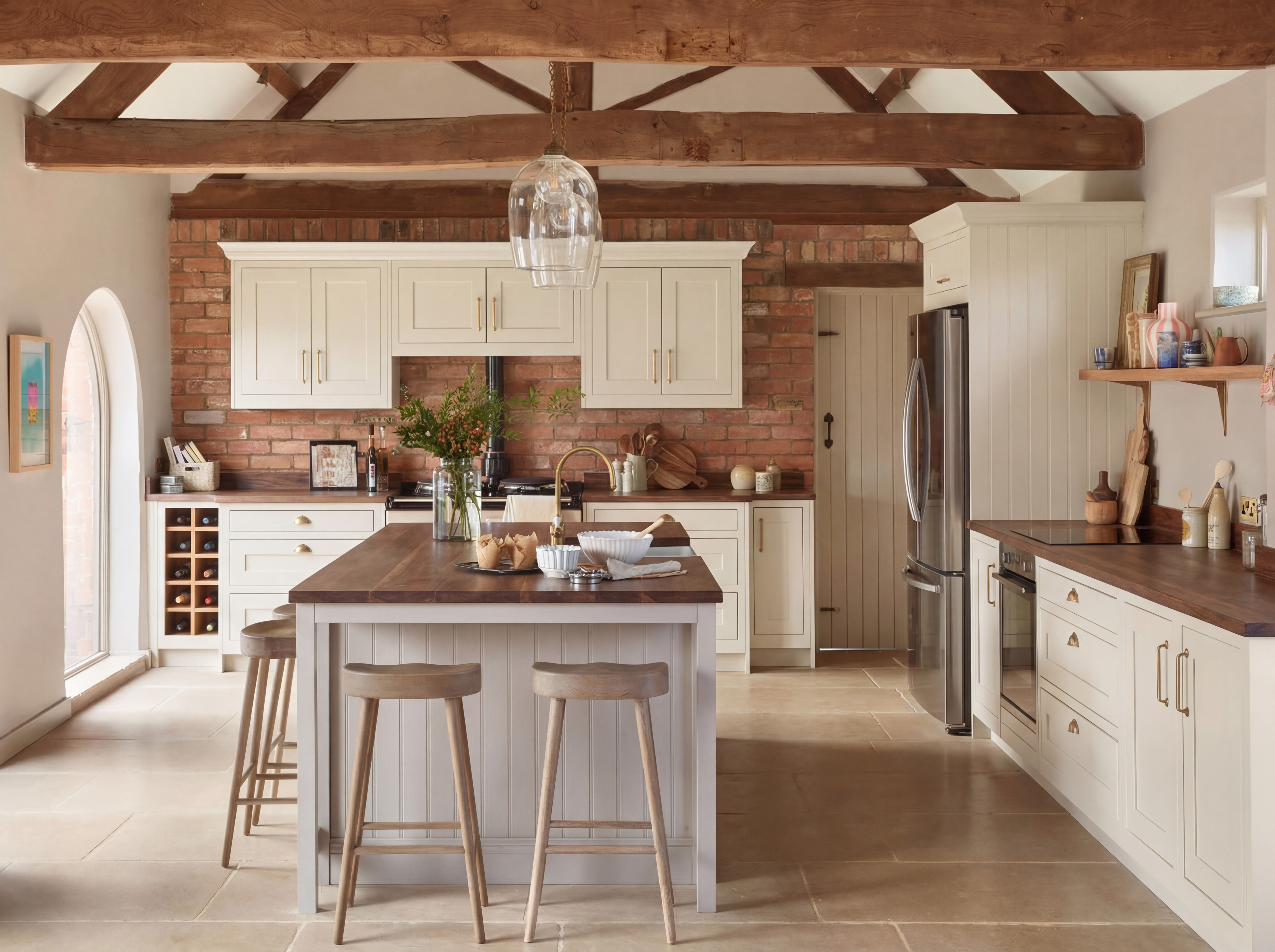
Shaker cabinetry plays well with both natural and engineered tops. Stone and stone-look surfaces (granite, quartzite, marble-effect quartz, concrete-look quartz) are durable, easy-care partners for painted Shaker in busy London homes. A wood shaker kitchen benefits particularly from a timber island or prep table: solid oak or walnut adding warmth and patina to a scheme that might otherwise feel too polished.
Where Each Surface Works Best:
Stone or quartz around the sink, hob, and main prep run – heat, knives, and constant wiping handled without fuss
Timber on the island or secondary surface – marks read as character rather than damage, nods to the farmhouse table the island is quietly referencing
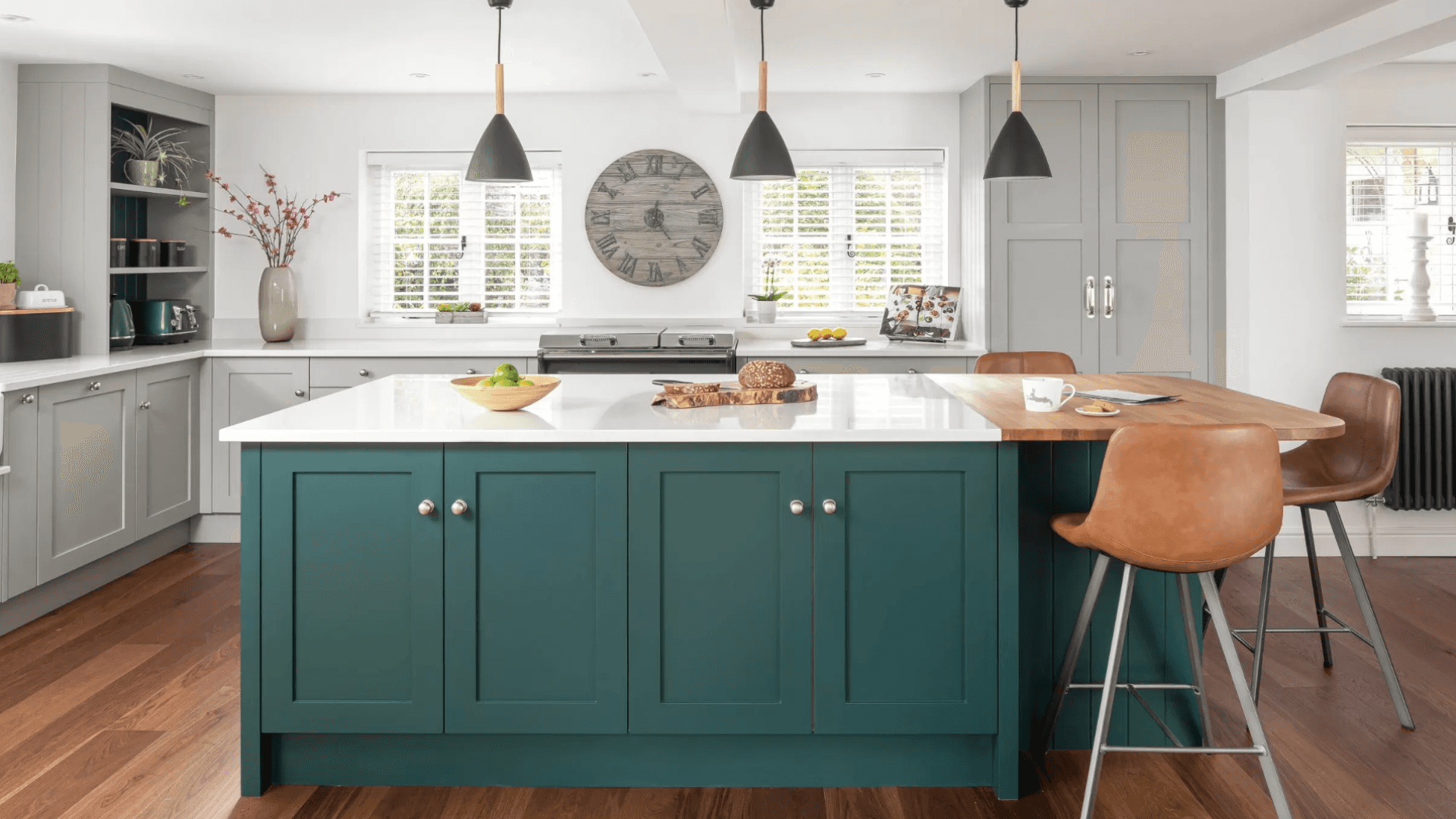
Mixed materials – quartz perimeters with a timber-topped island, currently one of the strongest moves in a Shaker scheme for texture and interest without losing the calm
Edge Detail Matters:
Pencil-round or soft bevelled edges on stone for classic schemes, slim square or pencil-round for contemporary Shaker. Rounded or eased edges on timber so the island end feels like furniture, not a hard counter. The softened lip of the worktop is part of the room's welcome.
Hardware & Metals
Hardware is the punctuation of a Shaker kitchen – small, deliberate marks that give the whole elevation a sense of grammar and flow.
The Most Enduring Combination:
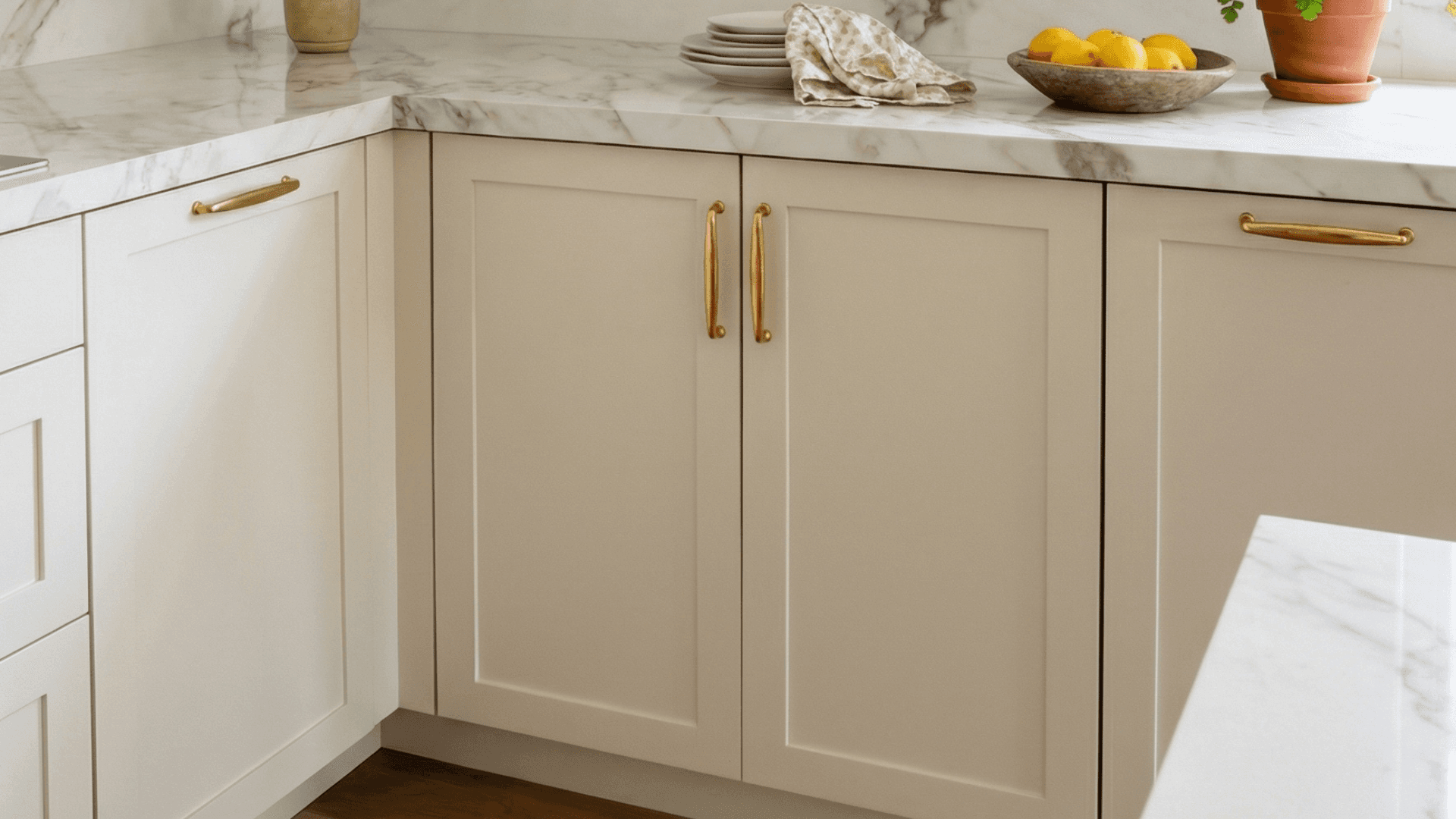
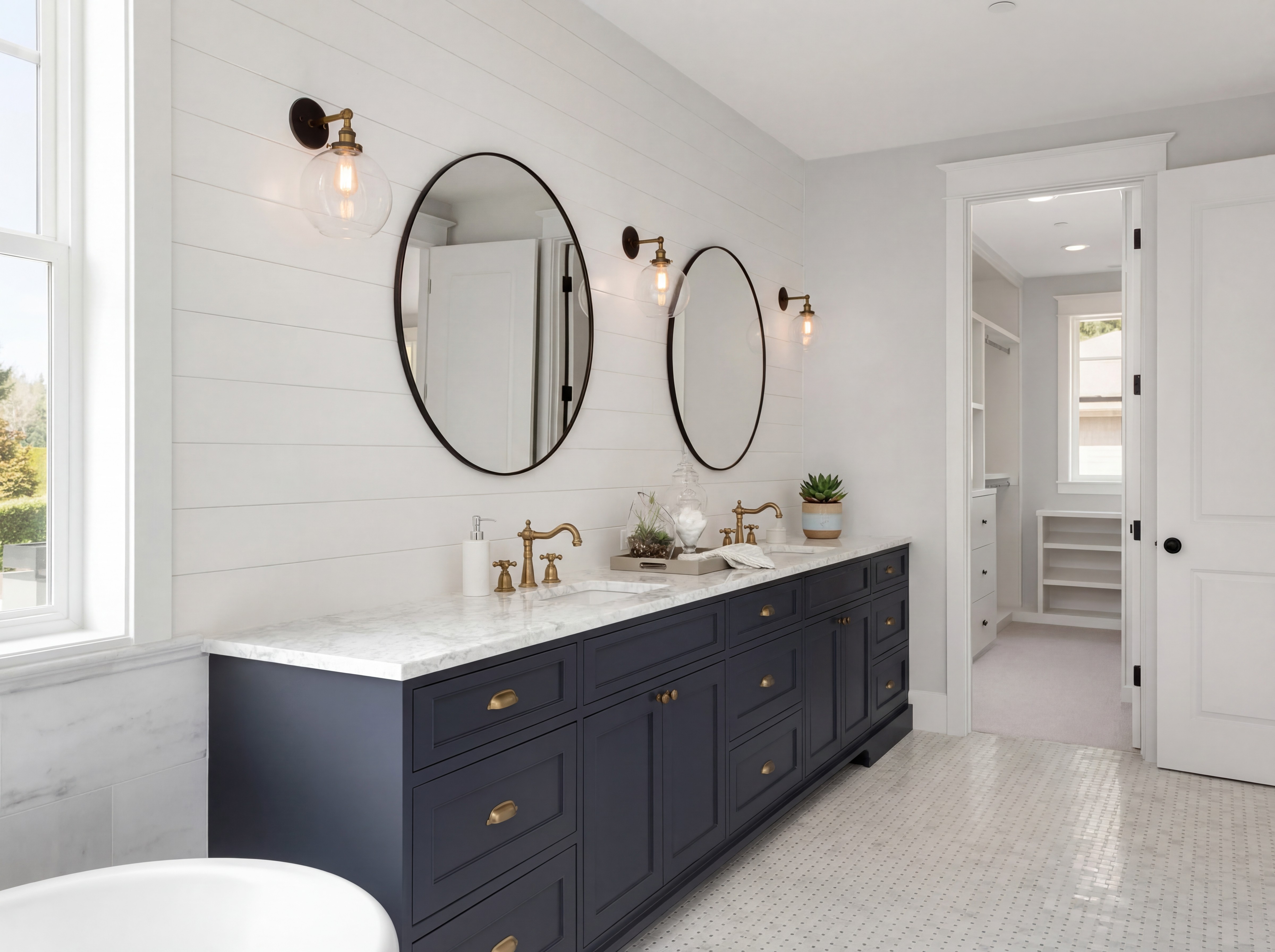
Round knobs on doors, cup (bin) pulls on pan drawers, slim bar pulls where a slightly sharper line is needed. Knobs sit naturally on doors and smaller drawers; cup pulls offer a comfortable grip and a visual rhythm that echoes the framed geometry of the cabinetry.
Positioned consistently (knobs centred on frame stiles, cup pulls lined up near the top rail of drawers) they create an ordered horizontal rhythm across every run.
Finishes That Last:
Unlacquered or aged brass – develops a soft patina with use, the most timeless choice for any Shaker scheme
Brushed brass and antique bronze – warm, characterful, sit comfortably with both traditional and modern Shaker
Warm nickel – bridges classic and contemporary, pairs well with cooler stones and paler cabinetry
Matte black – graphic, strong, works beautifully on paler Shaker in more contemporary London kitchens
Mix With Restraint:
Two dominant finishes, one small accent. Aged brass on hardware, nickel or chrome on taps, a touch of black in lighting. Sheen consistency matters – all brushed or matte finishes together feel calmer than competing surfaces in a tight London kitchen.
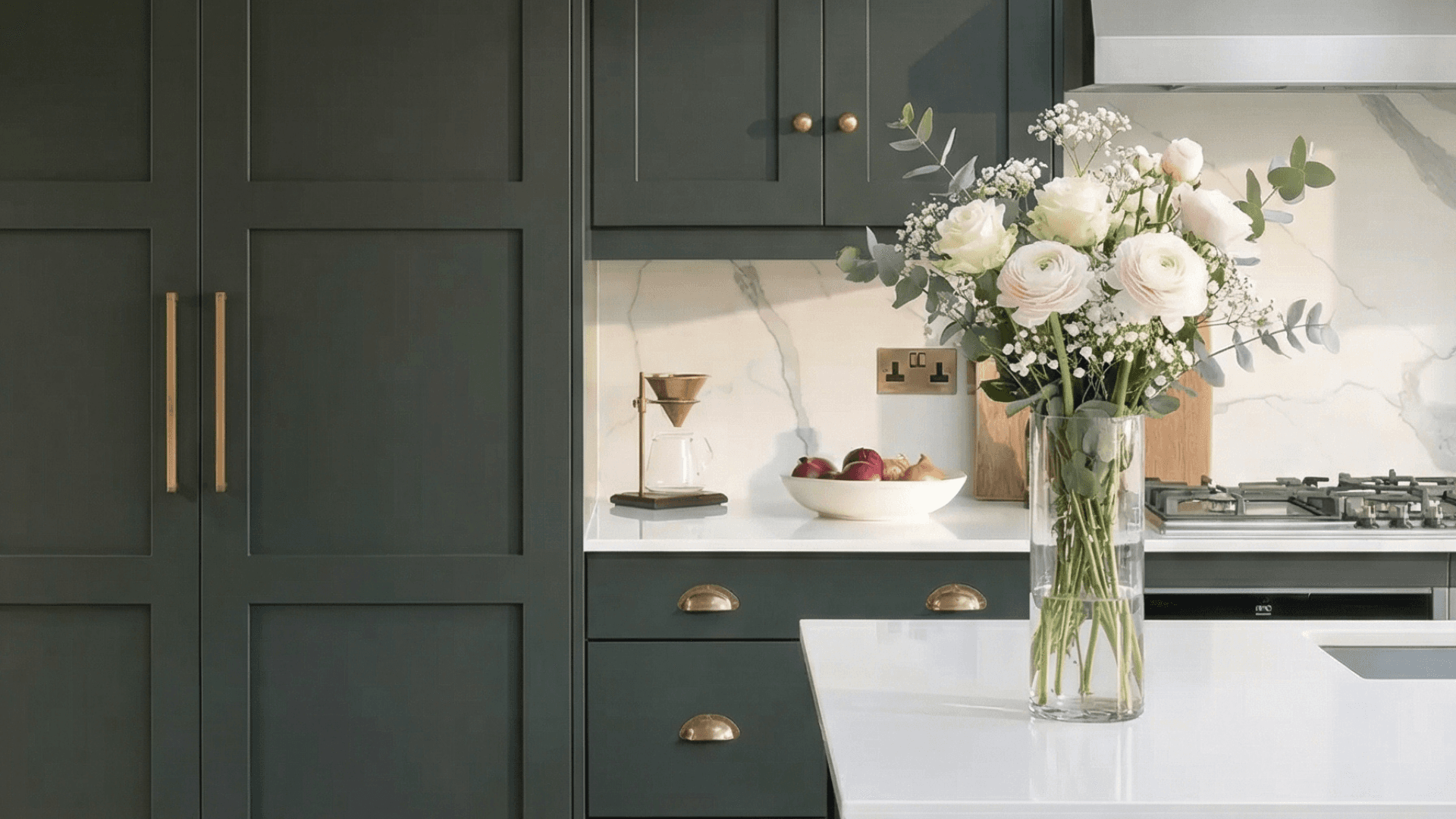
Tiling & Splashback
In a Shaker kitchen, the splashback is the tiled pause between worktop and wall cupboards – a simple, repeatable rhythm of shapes and light that makes the kitchen feel finished without dragging the eye away from the cabinetry.
Classic shaker kitchen units call for classic tiles. White or soft-coloured metro or subway tiles in brick bond are the most enduring choice – straightforward shape, repeating grid, echoing Shaker's order without feeling busy.
Handmade-look and Zellige-style tiles in creams, sands, soft greys, and gentle greens sit alongside them as a more textural option: slight glaze variation adds life in a way Shaker handles well because the cabinetry itself is so disciplined.
Grout Keeps It Right:
Tone-on-tone or slightly warmed grout – metro tiles stay gentle, appropriate to period London homes
Very dark grout with bright white tiles – reads industrial, not Shaker
Satin or soft gloss glaze – bounces light, wipes easily, doesn't feel harsh in lower-ceilinged terraces
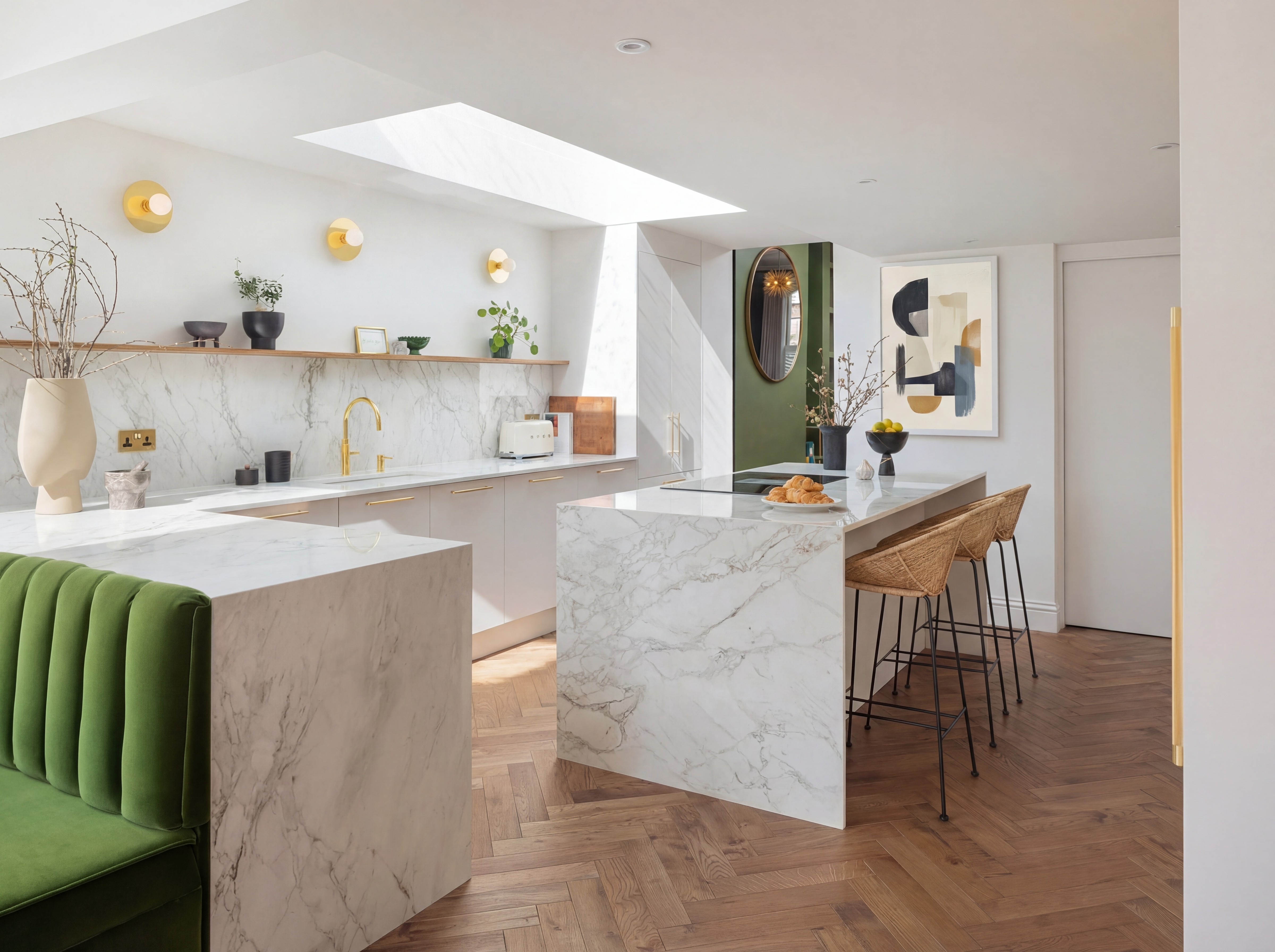
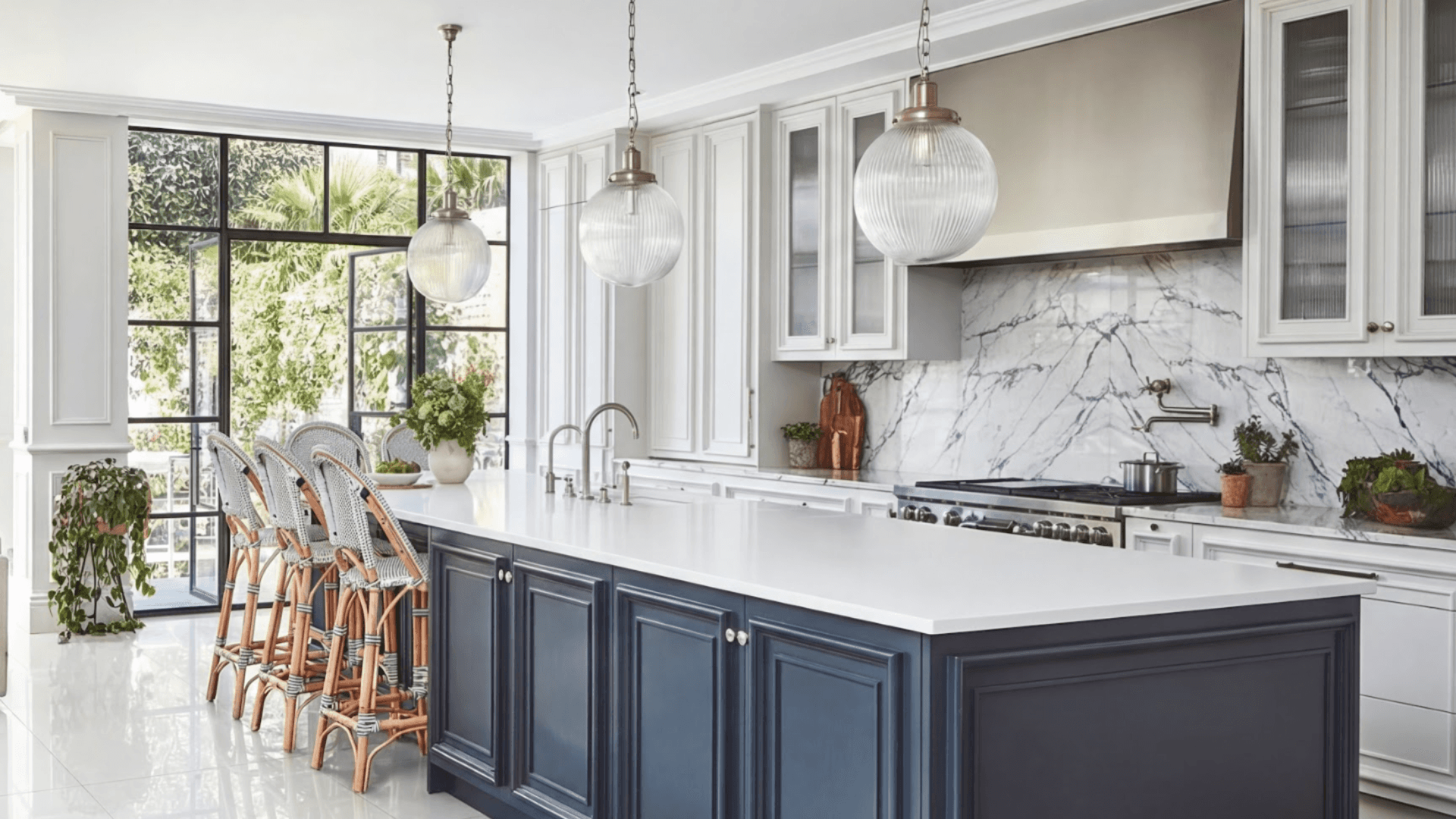
Behind the range, tile doesn't have to work alone. A full-height marble or quartz slab continued from the worktop turns the cooking wall into a quietly dramatic centrepiece – the joinery provides the framework, the stone does the storytelling.
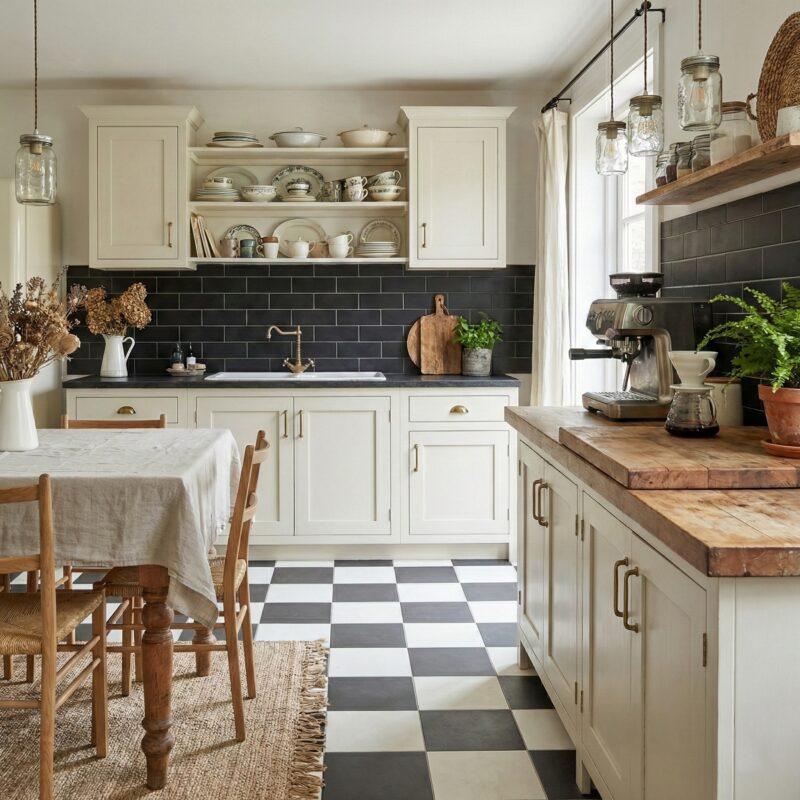
Flooring
The floor of a Shaker kitchen is the base note – warm, robust, and quietly textured, so those framed doors sit on something that feels as if it's always been there.
Wide-plank engineered oak is the most natural partner: warmth, compatibility with underfloor heating, and the ability to run unbroken through kitchen, dining, and living spaces in open-plan London layouts. Tumbled limestone, stone-effect porcelain, and wood-effect porcelain give the same grounded, country-meets-town feel with extra durability.
Pattern Does The Character Work:
Straight-laid wide boards – relaxed, timeless, the least demanding choice
Herringbone and chevron – a touch of formality and interest that reads classic rather than trendy; in galley or side-return spaces, running along the length of the room leads the eye towards glazing and garden
Checkerboard in chalky neutrals or soft greys – a long-loved Shaker motif, kept gentle rather than stark so it feels enduring
Steer Away From:
Cold mid-greys and high-gloss finishes. Beiges, honey oaks, smoked timbers, and soft stone tones – floors that hide daily dust and feel warm beneath cream, green, blue, or charcoal cabinetry. Matt or gently textured finishes throughout.
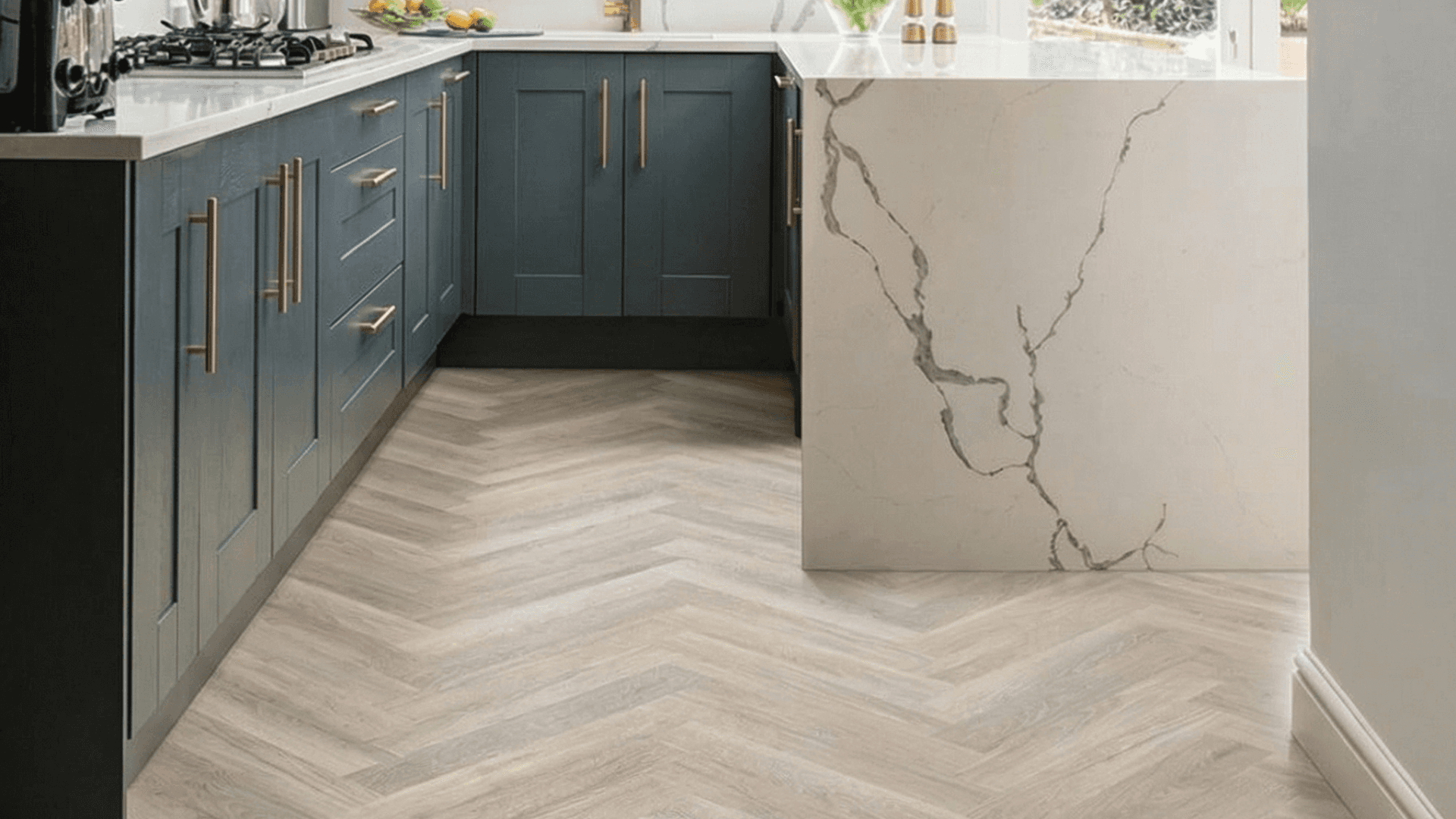
Colour Palette
A Shaker kitchen palette has two jobs: honouring the quietly crafted bones of the cabinetry, and feeling current enough for an open-plan London home.
The backbone is always warm neutrals (creams, soft whites, putty, pale greige, warm beige). These flatter framed doors, work with both timber and stone, and cope well with London's mixed light. Tone-on-tone approaches – walls a touch lighter than doors, or vice versa – keep frames reading without breaking the room into high-contrast blocks.
Nature-inspired greens and blues now sit alongside neutrals rather than outside them:
Soft sages, eucalyptus, and dusty greens – modern classics for Shaker, calm and grounding, beautiful with oak floors, brass hardware, and light-veined quartz.
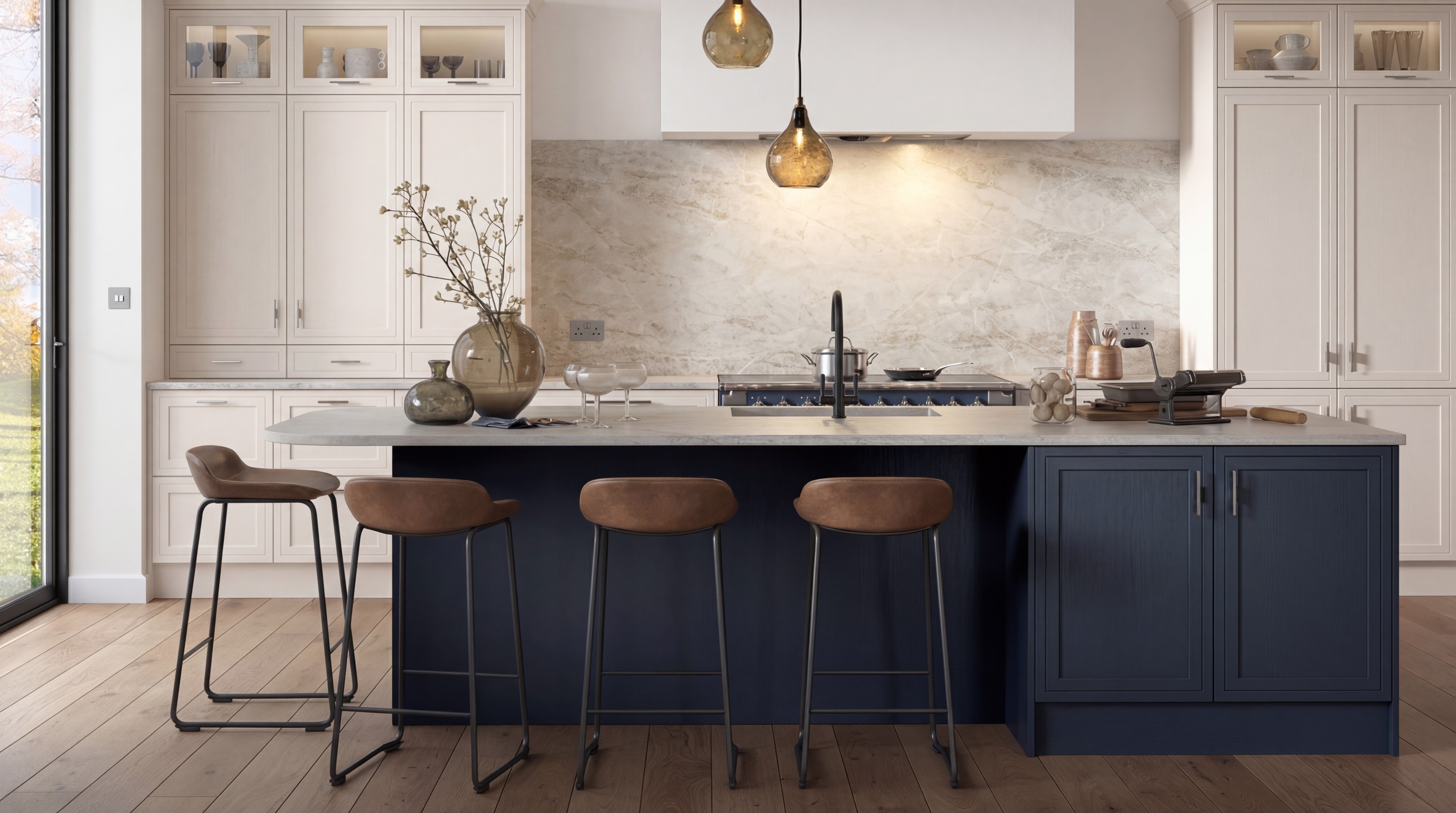
Forest and olive greens, navy, inky blue-greys, charcoal – drama on islands, lower cabinets, or full runs in larger or better-lit rooms; sophisticated rather than heavy.
Two-Tone Is Where Shaker Comes Alive:
Lighter uppers or walls with darker base cabinets or an island, depth without shrinking the room. A bolder colour confined to one island or dresser (everything else kept neutral) lets that single piece do the storytelling while the wider shell stays serene.
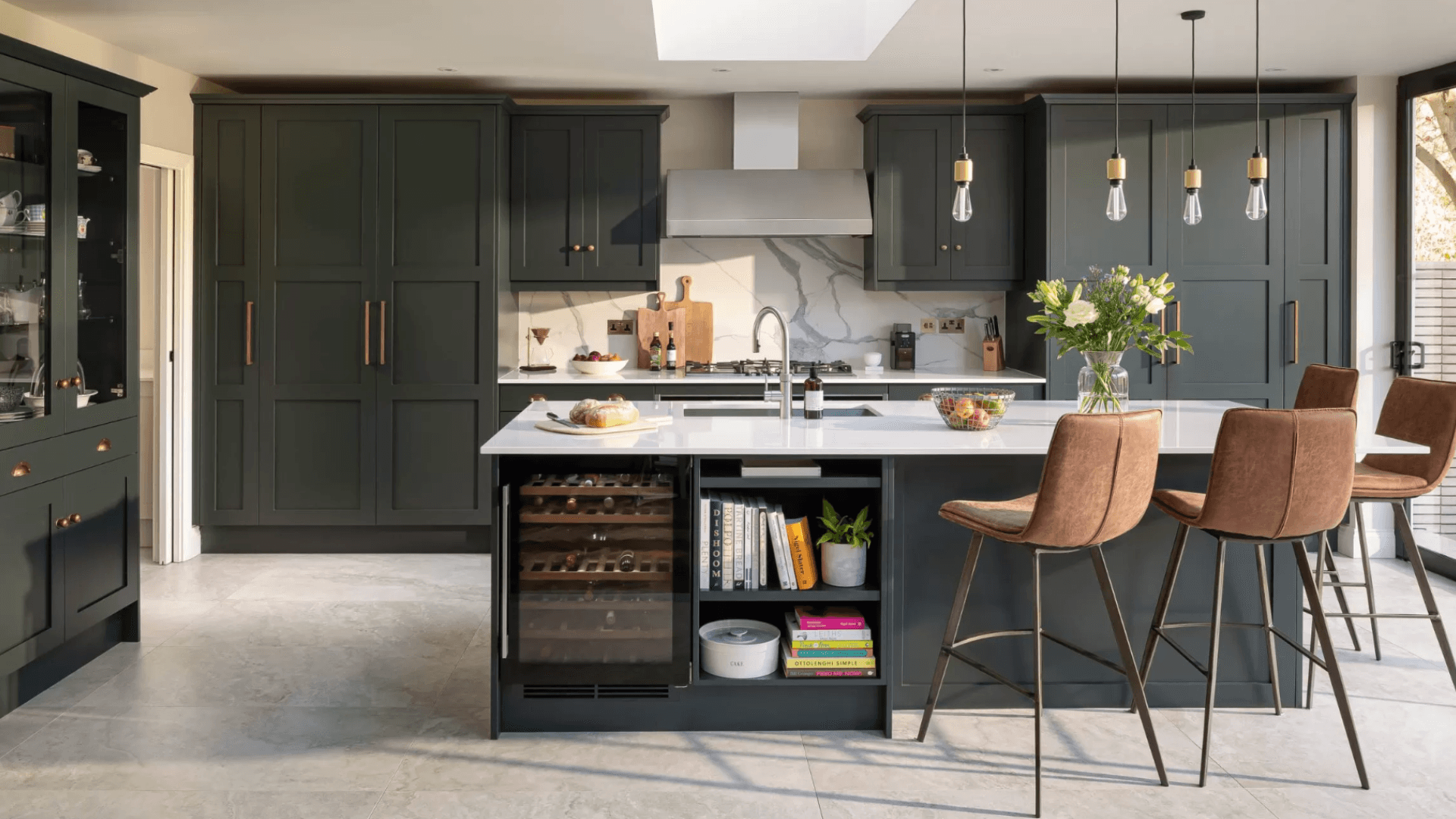
Lighting
Shaker kitchen lighting is an architecture of warmth – honest, unfussy fittings that feel like an extension of the cabinetry rather than decoration layered on top.
Four Layers, Always:
Ambient. Recessed downlights or a central low-glare fixture, even and dimmable, avoiding grids of overly bright spots that fight the classic cabinetry.
Task. Under-cabinet LED strips in warm white washing the worktop, focused pendants or downlights over the island, range, and sink.
Accent. Concealed strip lighting in dresser units, glazed wall cabinets, open shelving and plate racks, highlighting craftsmanship without adding visual noise.
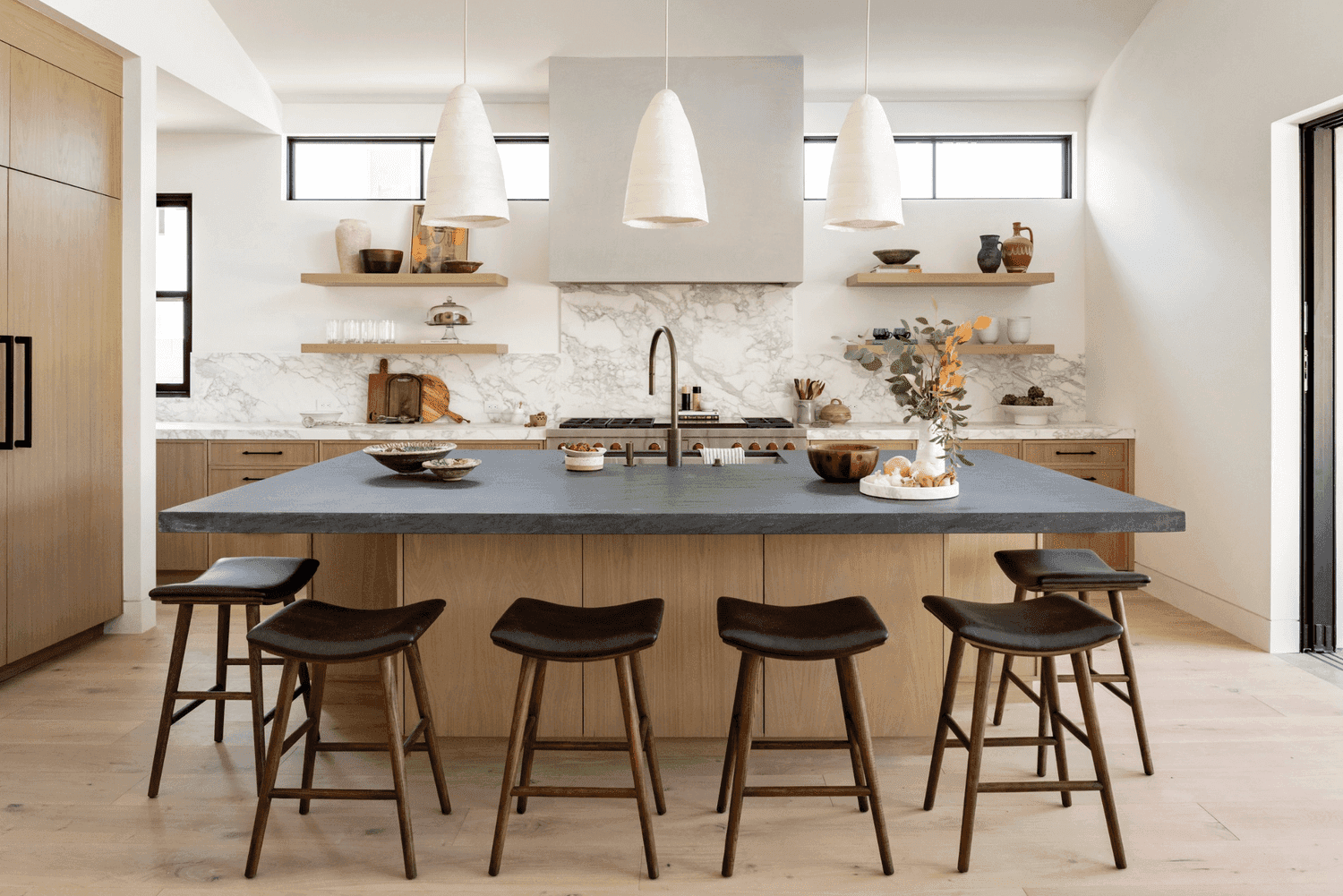
Decorative. Dome, schoolhouse, or bell-shaped pendants over the island or table; the one focal gesture, kept to simple lines and honest materials
Finishes That Suit Shaker:
Aged brass, antique bronze, black, softly brushed, or satin nickel – echoing the hardware throughout the room.
Colour Temperature Firmly Warm:
2700–3000K, the golden cast that flatters painted timber, natural stone, and period London architecture. Every circuit on a dimmer. One touch from cook-bright to evening-soft.
Appliances
In a Shaker kitchen, appliances are quiet, hard-working tools – integrated where it matters, characterful where it counts.
The Range Is The One Appliance That Earns The Right To Be Seen
A 90–110cm dual-fuel or induction range cooker in cream, black, deep blue, or forest green enamel sits under a Shaker mantel or canopy and anchors the cooking wall like a modern hearth.
Everything else plays a supporting role: integrated fridge and freezer behind Shaker doors reading as pantry or larder, dishwasher joining the run of doors by the sink without breaking the rhythm.
Behind those traditional fronts, the spec is quietly contemporary. Induction for speed and safety, fan-assisted ovens, powerful but well-ducted extraction hidden within the canopy, energy-efficient integrated refrigeration. Smart features (connectivity, presets, internal cameras) where they genuinely support how households cook and shop.
Joinery Details & Character
Joinery is the language of a Shaker kitchen – proportions, frames, hinges, and shadow lines are what give it character without ever feeling fussy.
The bespoke shaker kitchen story lives in the details. In-frame construction signals quality and permanence: doors set within a visible frame, a subtle reveal all around, each opening feeling like it was made for exactly that space. Rail and stile thickness tunes the character – chunkier frames feel heritage; slimmer rails read more current.
A fine bead detail on the inner edge of the frame adds depth and shadow without decoration. Cockbead moulding around a door or frame – a small rounded lip, very British, very considered – takes a good Shaker kitchen into genuinely bespoke territory.
Details That Distinguish Handmade Shaker Kitchens:
Exposed butt hinges in brass, chrome, or pewter – signature of classic in-frame Shaker, instantly signalling joinery rather than units.
Dovetailed oak or walnut drawer boxes – solid, beautifully jointed, the hidden quality that reveals itself every time a drawer opens.
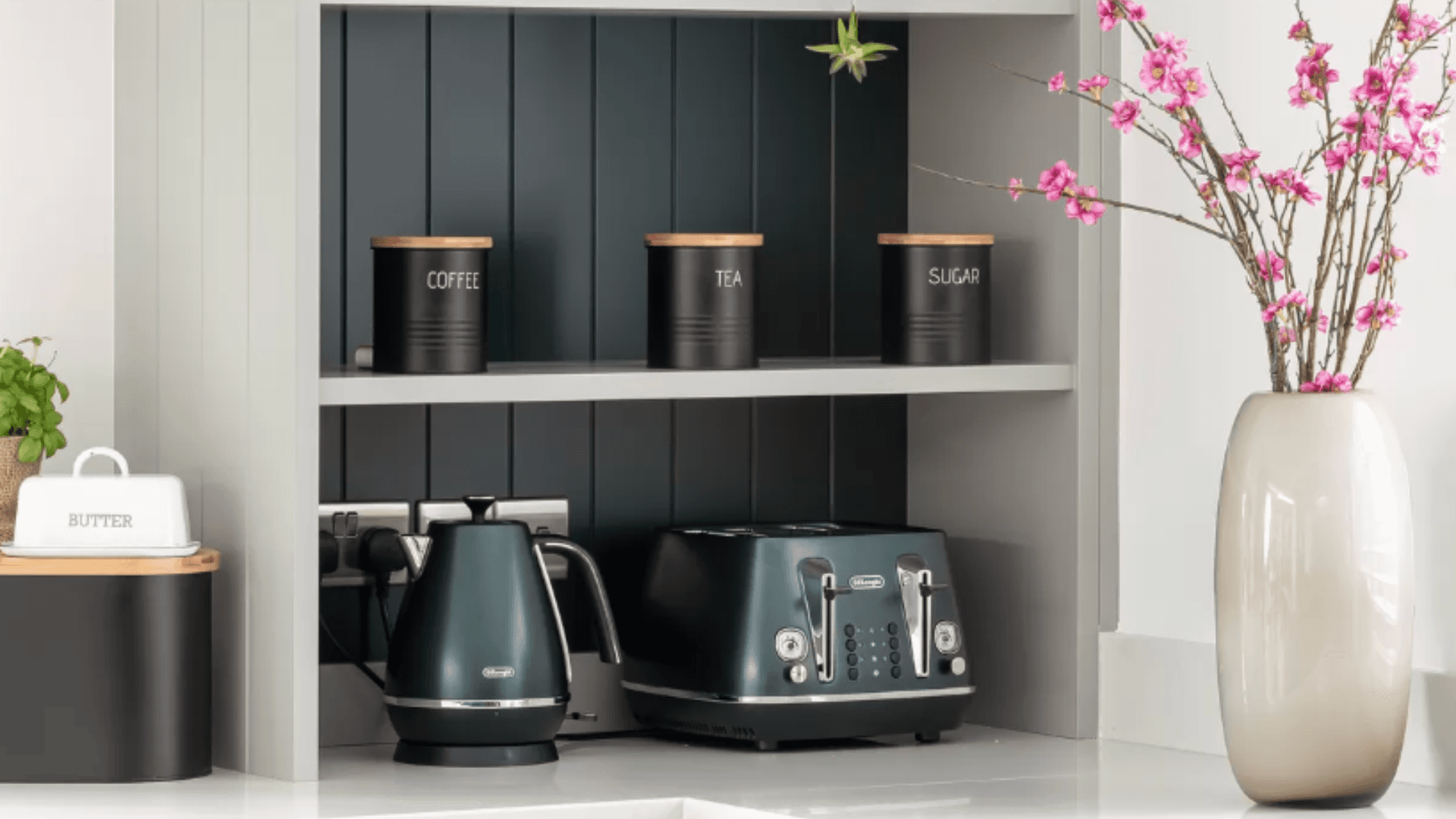
Glazed dresser units with Shaker frames – plate racks, cookbooks, and ceramics on show, everyday storage behind closed doors.
Shaker canopy or mantel around the range – turns the extractor into architecture, frames tile or stone behind, makes the cooking wall feel composed.
Tongue-and-groove or beaded panelling on island backs and alcoves – vertical rhythm, texture, and period resonance without clutter.
Framed end panels and scribes – cabinetry dying neatly into London's often imperfect walls, finished from every angle.
Storage
Shaker storage is calm on the outside and clever on the inside – purposeful, well-ordered, with a place for every plate, pan and packet.
Shaker style kitchen cabinets do the heavy lifting with full-height larder cupboards: door-mounted racks, internal drawers, worktop breakfast zones behind a single pair of doors. A huge amount of storage in 600–1,000mm of width, nothing visible from the room.
Where London floorplans allow, a walk-in pantry or a tall run concealing a utility room keeps the visible kitchen entirely serene.
Everyday Storage Moves:
Wide, deep pan drawers with oak or timber internals – everything comes to you, soft-close, dovetailed, the modern Shaker staple.
Drawer-within-a-drawer layouts – cutlery and utensils on a second level, clean Shaker lines outside.
150–300mm pull-out units beside the range – oils, spices, and baking ingredients within arm's reach in narrow London kitchens.
Corner pull-out or carousel systems – engineering hidden behind those quiet Shaker doors, turning recesses into genuinely useful storage.
Open shelves for everyday crockery, cookbooks, and jars – warmth and personality, always backed up by serious closed storage elsewhere.
Inside:
Oak-lined larders, spice racks on larder doors, internal lighting so nothing disappears into the back of a cupboard.
Outside:
A calm, rhythmic grid of doors and drawers, consistent widths, centred handles. Hidden complexity behind a timeless façade.
Why Kitchen Fitters London For Shaker Kitchens
A great Shaker kitchen is only as good as the craftsmanship behind it. We manage every detail from first survey to final sign-off.
Exclusive European manufacturer partnerships – direct access to in-frame cabinetry, premium hardwoods, natural stone, and hardware unavailable through standard trade suppliers.
Full end-to-end project management – one project manager coordinates every trade so the precision of the joinery survives intact into the build.
Bespoke and custom work – canopies, dressers, larders, cockbead details, and in-frame shaker kitchen joinery designed specifically for your London property.
Comprehensive warranty – materials, workmanship, and installation all covered long after completion.
We bring the showroom to you – timber samples, stone sections, and hardware finishes brought to your home so every decision is made in the right light.
Shaker Kitchen Company London FAQs
What's the difference between in-frame and lay-on Shaker cabinetry?
An in frame kitchen sets the door within a visible frame, giving a more crafted, furniture-like finish with a subtle reveal around each opening – the premium, most traditional expression of Shaker design. Lay-on Shaker doors overlay the carcass for a cleaner, slightly more contemporary read, often with slimmer rails. Both are genuinely Shaker; the choice depends on the property, the palette, and how traditional or current you want the final result to feel.
Can you design a bespoke Shaker kitchen for an awkward London space?
Yes – it's where we add the most value. A bespoke shaker kitchen is designed around your specific floor plan, ceiling height, and architectural features rather than adapted from a standard range. In London's terraces, mansion flats and side-return extensions, that means joinery that fits exactly, scribes that negotiate imperfect walls, and details like canopies, dressers and larders specified for your room rather than a showroom.
What colours work best for Shaker kitchens in London?
Shaker kitchens in London work beautifully across a wide palette – warm creams, soft whites, and putty for brighter or smaller spaces; deep sage, forest green, navy, and charcoal for larger or better-lit rooms. Two-tone schemes – lighter uppers with a darker island or lower run – are one of the most popular current approaches.
Do you supply shaker kitchen units and materials, or do I source them separately?
We supply everything. Through our exclusive manufacturer partnerships, we source shaker kitchen units, worktops, hardware, tiling, and flooring based on your vision and budget. You don't need to buy anything separately – design, supply, and installation are managed by one team, so there's no gap between what was specified and what gets fitted.
How long does a Shaker kitchen installation in London take?
Most Shaker kitchen projects take 3–5 weeks from demolition to completion, depending on size and the extent of bespoke joinery involved. Projects including custom canopies, dressers, larders, or structural work may take longer. We provide a clear timeline during the planning stage, and one project manager coordinates every trade throughout, so the schedule stays on track from the first day of demolition to final sign-off.